


 Vasai, Maharashtra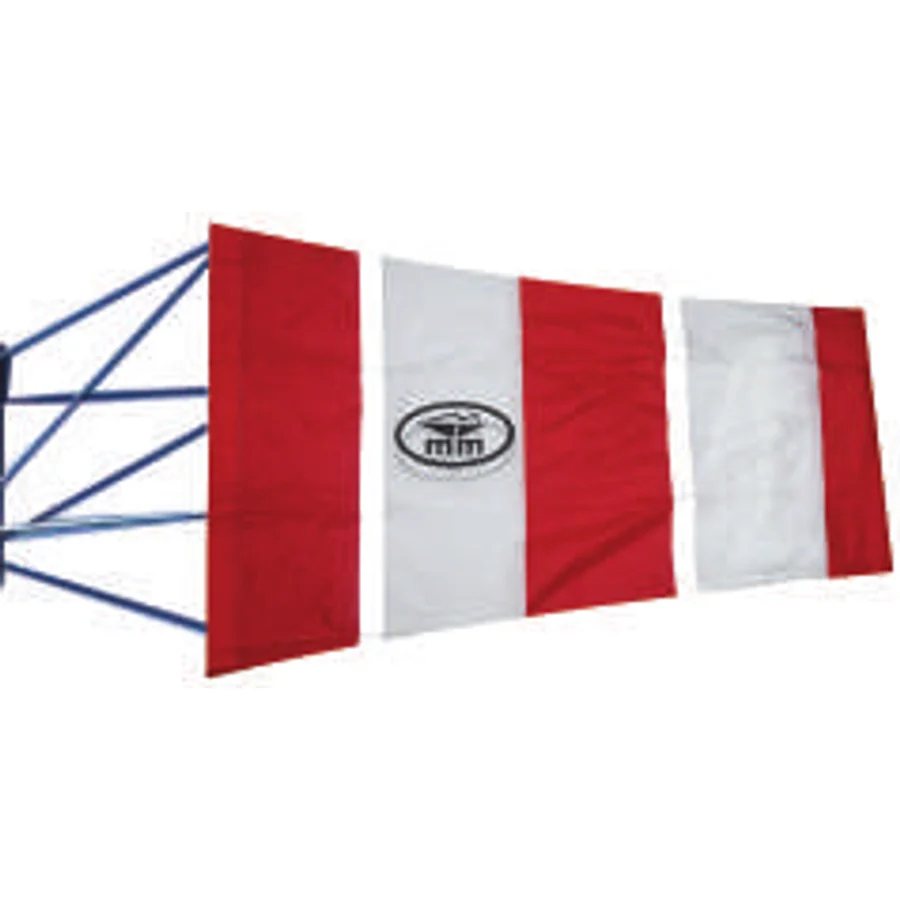
A wind sock is a fabric cone open at both ends, on a frame that swivels on a pole. The wind fills it and swings it round, so it shows at a glance where the wind is coming from and roughly how hard it is blowing. Jetties, ports, helipads, airstrips and chemical plants use them for exactly that.
Which way is the wind blowing?
The wide mouth faces into the wind and the tail points where the wind is going. A wind is named for where it comes from, so a sock whose tail points west shows an easterly wind.
How strong is it?
The US aviation standard for wind cones asks for a sock that swings to the wind at 3 knots and stands fully out at 15 knots. On a five-stripe sock built that way, each stripe that stands out adds about 3 knots:
| Stripes standing out | Wind, about |
|---|---|
| 1 | 3 knots |
| 2 | 6 knots |
| 3 | 9 knots |
| 4 | 12 knots |
| All 5, fully out | 15 knots or more |
Where to mount one
- Clear of buildings, cranes and trees, which bend and break up the wind.
- Where it can be seen from wherever the decisions are made: the berth, the landing pad or the control room.
- Lit, if it will be read at night.
Keep it readable
- Replace a sock that is torn or faded: a torn sock reads a lighter wind than there is.
- Check the frame turns freely on its pole; a stuck sock points the wrong way.
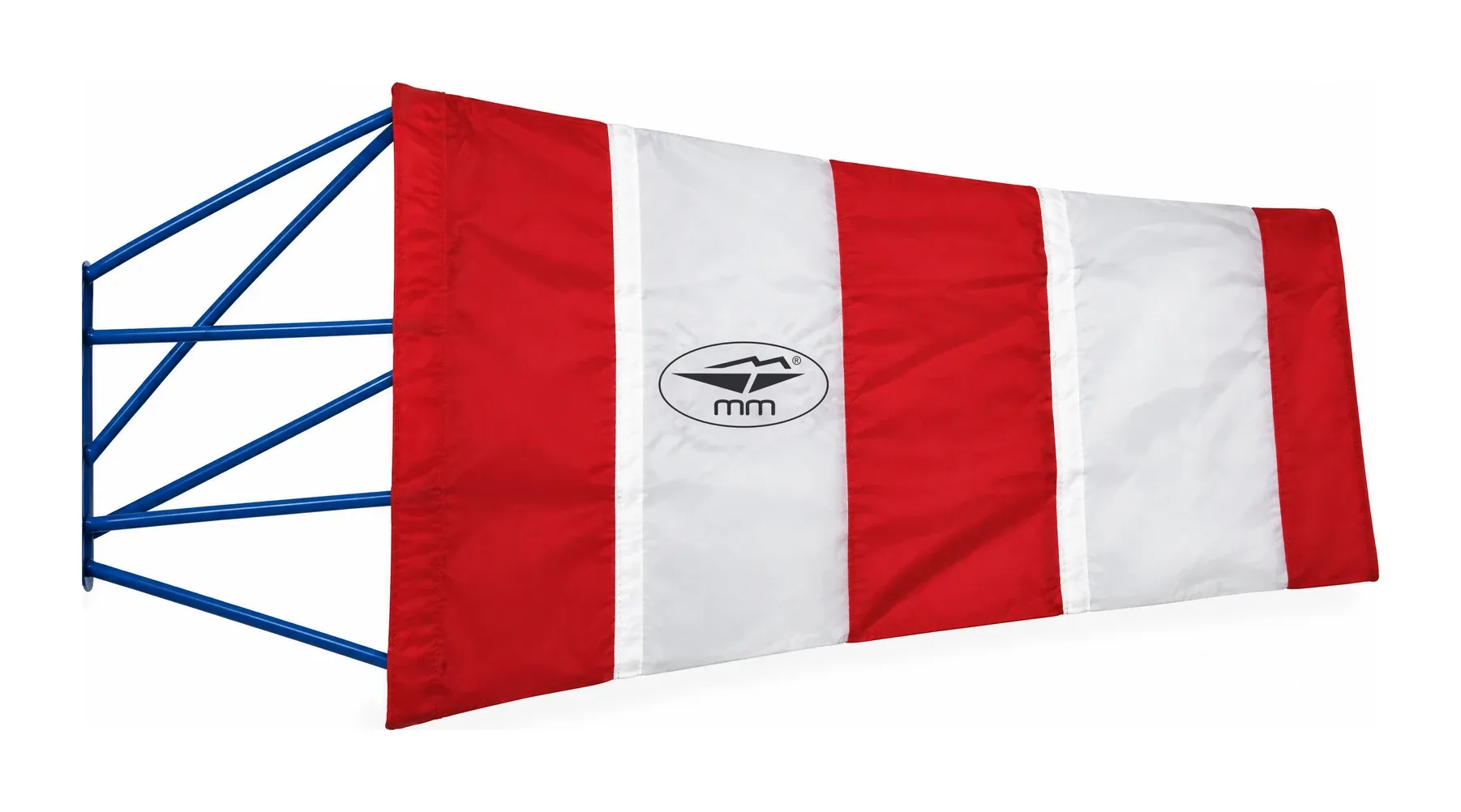
Wind Sock
Model MMWS
A wind sock is a guide, not an instrument. Where wind speed sets a safety limit, measure it. Ask us for a quote.