
 Vasai, Maharashtra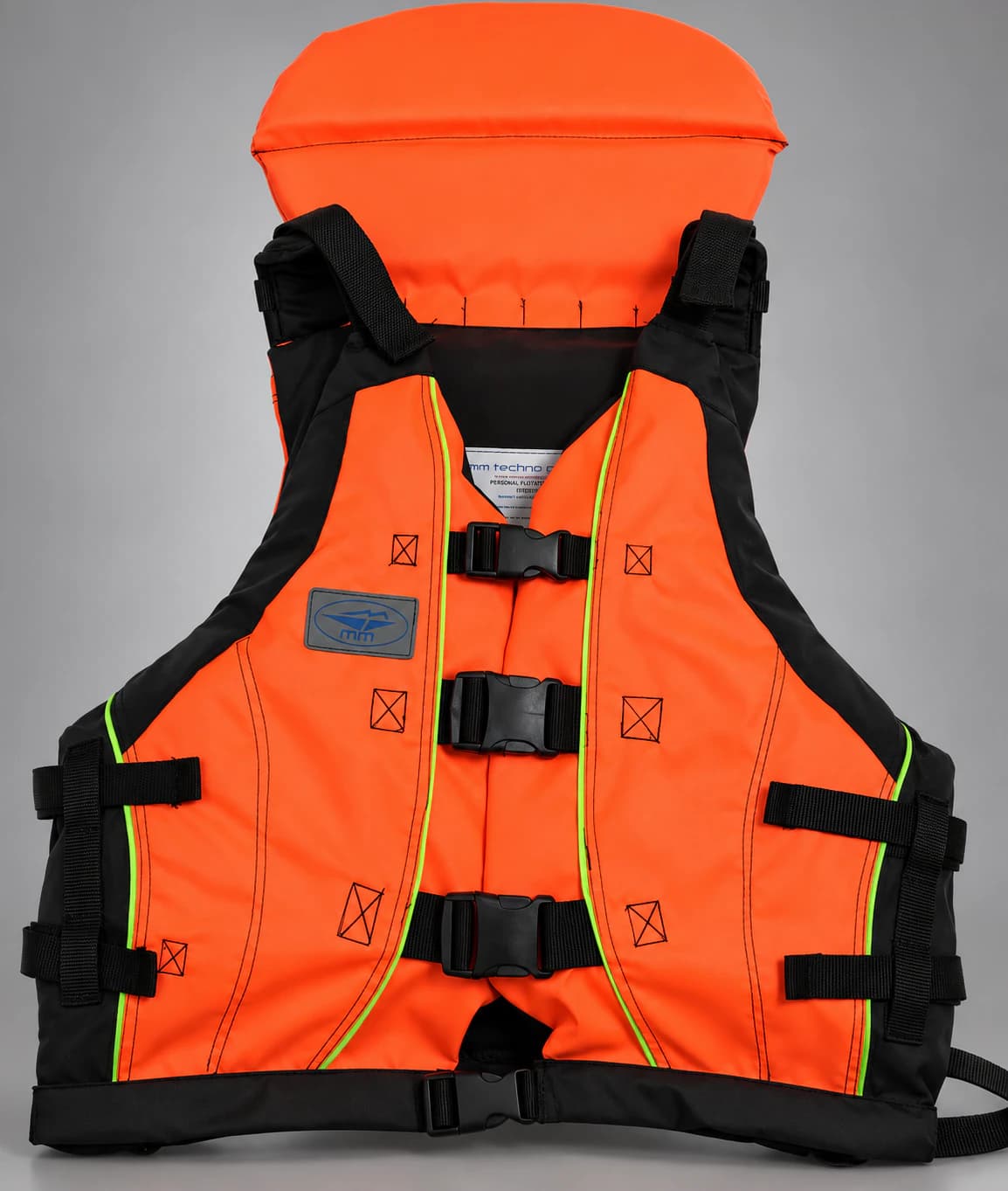
A personal flotation device (PFD) is any wearable buoyancy. MM lists each life jacket and work vest by two figures: a PFD Type, and a buoyancy in newtons. This guide explains both, then puts the whole range on one table so you can compare models by the numbers that matter.
What the PFD types mean
The Type scale comes from the US Coast Guard classification and is used in catalogues worldwide. Each type answers a different question: how far from help will the wearer be, and will they be conscious? MM lists the PFD Type alongside the ISO 12402 level where one is stated, and states no US Coast Guard approval for any model.
- Type I, offshore life jacket. The highest buoyancy, designed to turn most unconscious wearers face-up. For open, rough or remote water where rescue may be slow.
- Type II, near-shore buoyant vest. Less bulky, and may turn some unconscious wearers face-up. For calmer water where rescue is likely to be quick.
- Type III, flotation aid. Made to be comfortable for long periods of deck work in calm, inland or near-shore water. It supports a conscious wearer but is not designed to turn an unconscious one face-up.
- Type V, special-use device. Approved only for the activity on its label, such as a work vest, and only when actually worn.
The ISO 12402 buoyancy levels
EN ISO 12402 is the European and international standard for wearable flotation. It classes devices by their minimum buoyancy rather than by a type name, and MM lists several jackets against its parts:
- 50 N (part 5): a buoyancy aid for competent swimmers in sheltered water with help close at hand.
- 100 N (part 4): a lifejacket for sheltered water. It may not turn an unconscious wearer who is wearing heavy clothing.
- 150 N (part 3): a lifejacket for general and offshore use. It will turn most unconscious wearers face-up.
- 275 N (part 2): a lifejacket for offshore and extreme conditions, or where heavy protective clothing traps air.
The MM range on one table
| Model | Buoyancy | PFD type | User weight | Size | Standards |
|---|---|---|---|---|---|
| Saviour | 275 N | – | – | Adult | SOLAS LSA Code, BS EN ISO 12402:2020 |
| MMLJ | 240 N | I | Up to 140 kg | Adult | IRS Type Approval, SOLAS LSA Code |
| MMLJC | 90 N | I | Up to 43 kg | Child | BS EN ISO 12402:2020, PFD Type I, CE |
| SAILOR | 120 N | III | Up to 100 kg | Adult Universal | BS EN ISO 12402:2020, PFD Type III, CE |
| SEA HORSE | 70 N | III | Up to 70 kg | Adult Universal | BS EN ISO 12402:2020, PFD Type III, CE |
| SIGMA | 150 N | III | Up to 140 kg | Adult Universal | IRS Type Approval, SOLAS LSA Code, BS EN ISO 12402:2020, PFD Type III, CE |
| SOLDIER | Adjustable, 70–160 N | III | 60–130 kg (unequipped to heavily equipped) | Adult Universal | BS EN ISO 12402:2020, PFD Type III, CE |
| STELLAR | 120 N | III | Up to 95 kg | Adult Universal | BS EN ISO 12402:2020, PFD Type III, CE |
| STERN | 120 N | III | Up to 120 kg | Adult Universal | BS EN ISO 12402:2020, PFD Type III, CE |
| STERN WITH HEADREST | 120 N | III | Up to 120 kg | Adult Universal | BS EN ISO 12402:2020, PFD Type III, CE |
| SUMO | 150 N | III | Up to 140 kg | Adult Universal | BS EN ISO 12402:2020, PFD Type III, CE |
| SUMO WITH HEADREST | 150 N | III | Up to 140 kg | Adult Universal | BS EN ISO 12402:2020, PFD Type III, CE |
| MMWVCG | 78 N | V | Up to 56 kg | Adult Universal | SOLAS LSA Code, CE, PFD Type V |
| MMWV | 100 N | III | Up to 90 kg | Adult Universal | BS EN ISO 12402:2020, PFD Type III, SOLAS LSA Code, CE |
Choosing between them
- Crew who may be in the water unattended, or in open sea, need a jacket that turns them face-up: a Type I or a 150 N class, such as the MMLJ.
- Deck work with the vessel close and rescue quick is what a Type III flotation aid is for. Match the user-weight column to the crew, not to the average.
- Crew carrying equipment need lift for the equipment as well as the body. That is what the adjustable range on the Soldier is listed for.
- A work vest counts only when it is on (the MMWVCG is listed as Type V). If a vest will be taken off for the hot part of the day, specify a jacket instead.
Standards named against a product are as stated by MM Techno Plast. See which approvals we hold documents for before you specify one in a tender.