


 Vasai, Maharashtra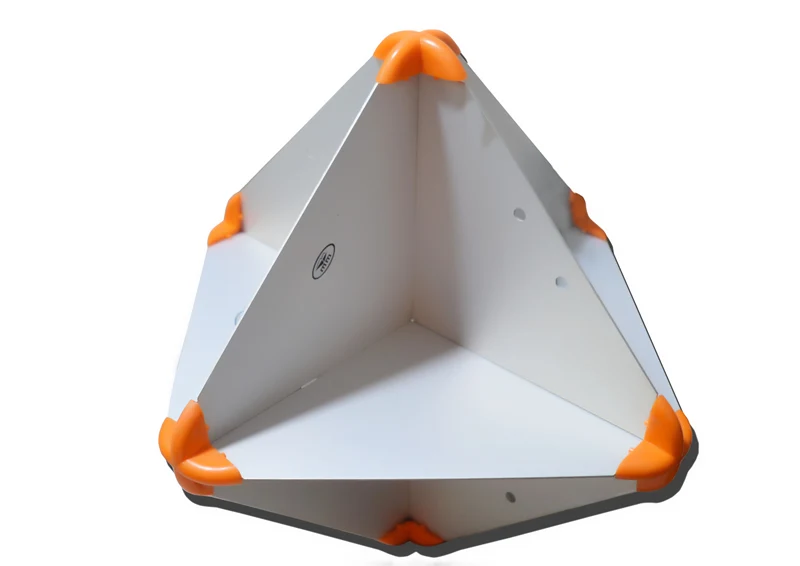
A ship’s radar sees a boat by the energy the boat sends back. A steel hull returns a strong echo; wood and plastic return very little, and a small boat low in the water among waves can vanish from a radar screen just when a large ship most needs to see it. A radar reflector gives the boat a strong, steady echo.
How it works
Three flat metal plates meeting at right angles form a corner that bounces a radar wave straight back the way it came. A radar reflector packs several such corners into one shape, so that from most directions at least one corner faces the ship’s radar. The common octahedral reflector has eight.
Mounting it: the catch-rain position
An octahedral reflector is hung with one of its hollow corners facing straight up, as if to catch rain, not balanced on a point. In that position its strongest echoes spread out towards the horizon, where the radar is.
How high?
As high as the boat allows. Sailing authorities recommend at least 4 m above the water where a boat can manage it; the higher the reflector, the further away a ship’s radar can find it.
Standards
ISO 8729 sets the performance of passive radar reflectors for boats; ask whether a reflector has been tested to it. A reflector is one part of being seen: navigation lights at night are another. See navigation light configurations.
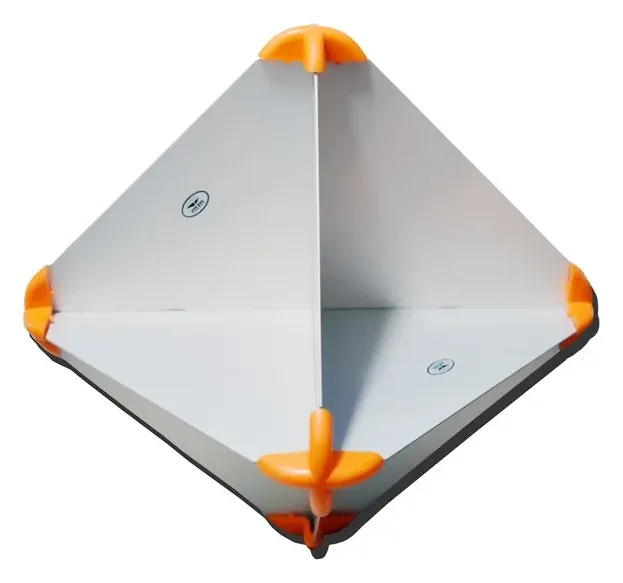
Radar Reflector
Model MMRR01
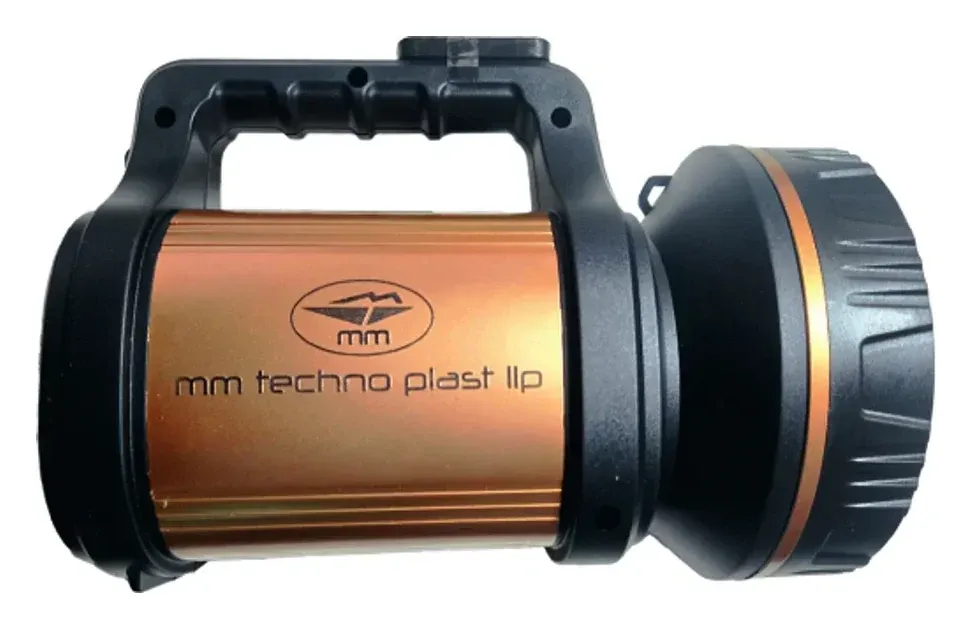
Search Light – MMAPSL
Model MMAPSL
For the rest of a small boat’s kit, see safety equipment for a fishing boat. Ask us for a quote.