

 Vasai, Maharashtra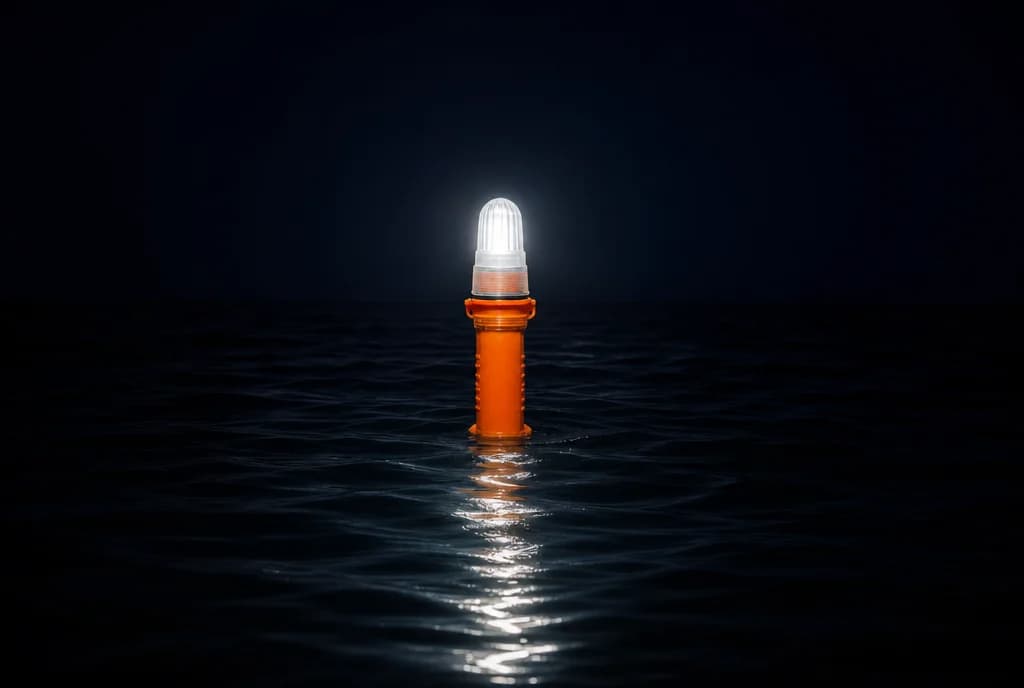
At night a person in the water is found by a light, and SOLAS asks for two kinds: one on the life jacket, and one on the lifebuoy thrown to them. They look alike and are tested to different rules. This post sets the two side by side.
Two lights, two rules
| Requirement | Life jacket light | Lifebuoy light |
|---|---|---|
| Intensity, upper hemisphere | At least 0.75 cd | At least 2 cd |
| Duration | At least 8 hours | At least 2 hours |
| Colour | White | White |
| If flashing | 50 to 70 a minute | 50 to 70 a minute |
| Switching on | A flashing light has a manual switch | Self-igniting: water switches it on |
The difference makes sense: the lifebuoy light marks the spot from the first minutes after someone goes over, so it must be bright, survive the same drop as the ring and be impossible for water to put out; the life jacket light stays with the person through a long wait, so it must last.
How do they switch on?
A lifebuoy light has to be burning when it lands, so it is self-igniting: water switches it on. A life jacket light may be switched on by hand or by water; many are water-activated so that an unconscious or exhausted wearer does not have to find a switch. Both of MM’s lights are listed as water-activated.
MM’s two lights
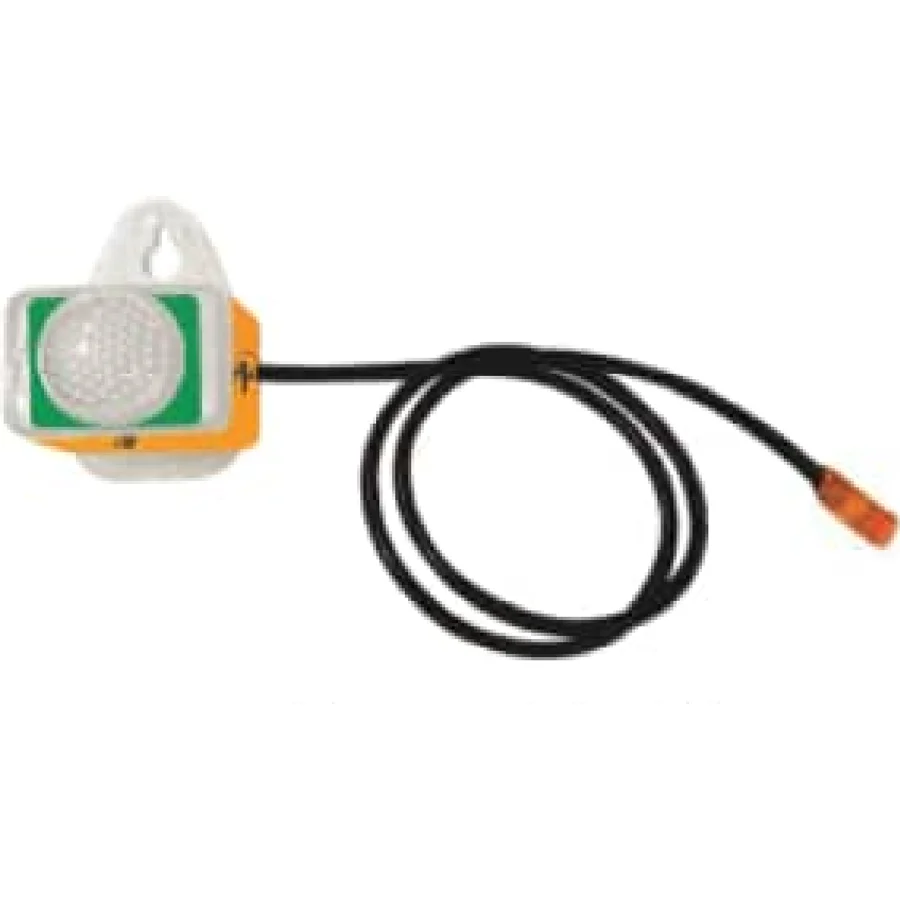
The MMLJL is a water-activated LED light on a lanyard that fits and locks to the life jacket. The standards MM declares for each light are listed on its product page: the MMLJL and the MMLBL.
| Specification | Value |
|---|---|
| Activation | Water-activated LED, operates on contact with water |
| Battery | Lithium, 8 hours |
| Luminous intensity | 0.75 cd |
| Fit | Fits and locks to the life jacket |
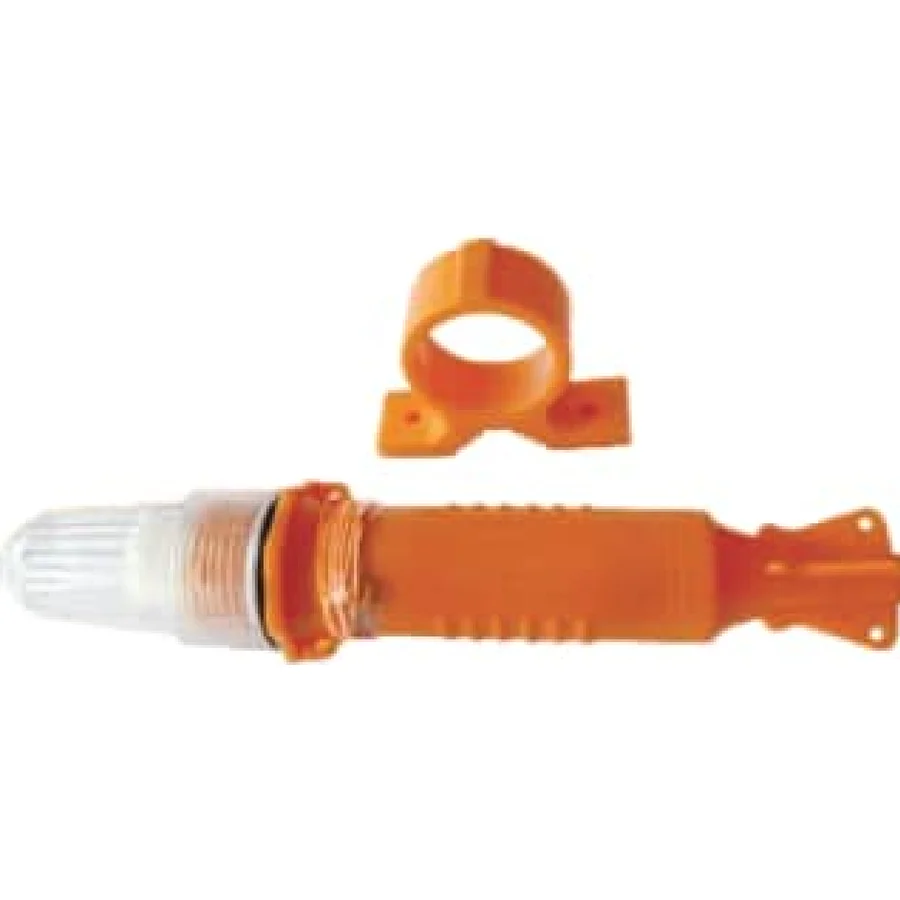
| Specification | Value |
|---|---|
| Activation | Water-activated LED, operates on contact with water |
| Body | Durable plastic |
| Battery | Lithium, 8 hours continuous |
| Luminous intensity | 2 cd |
| Flash rate | 70 flashes per minute |
| In water | Pops up above the surface when immersed |
Smoke signals and how many lights a ship carries
Under SOLAS, at least half of a ship’s lifebuoys carry a self-igniting light, and at least two of those also carry a self-activating smoke signal that gives off highly visible smoke for at least 15 minutes. The lifebuoy post has the full fit-out and the numbers by ship length.
Checks for every light
- The battery is inside the date printed on the light.
- The lens is clean and uncracked, and the body is sound.
- It is fixed where it belongs: locked to the jacket, or in the lifebuoy’s bracket so it goes overboard with the ring.
- It is tested the way its instructions say, as part of the monthly check.
The whistle beside the jacket light
A SOLAS life jacket carries a whistle as well as a light; the SOLAS requirements post gives the rule. MM’s MMLJW life jacket whistle is non-corrosive, works either way up and sounds in air immediately after immersion, and a tether line attaches it to the jacket. MM lists it with IRS type approval as per the SOLAS LSA Code as amended, tested by an Indian Government approved laboratory, as stated by MM.
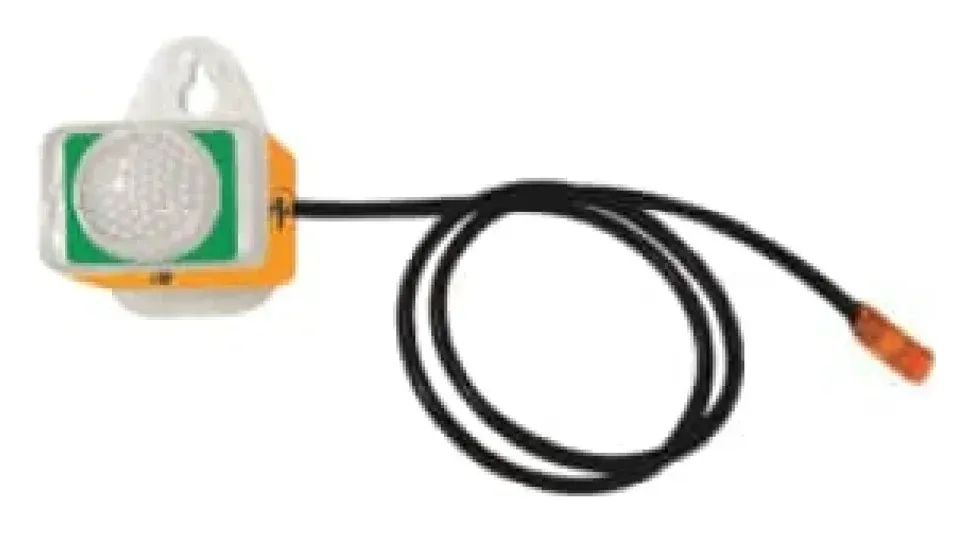
Life Jacket Light – MMLJL
Model MMLJL
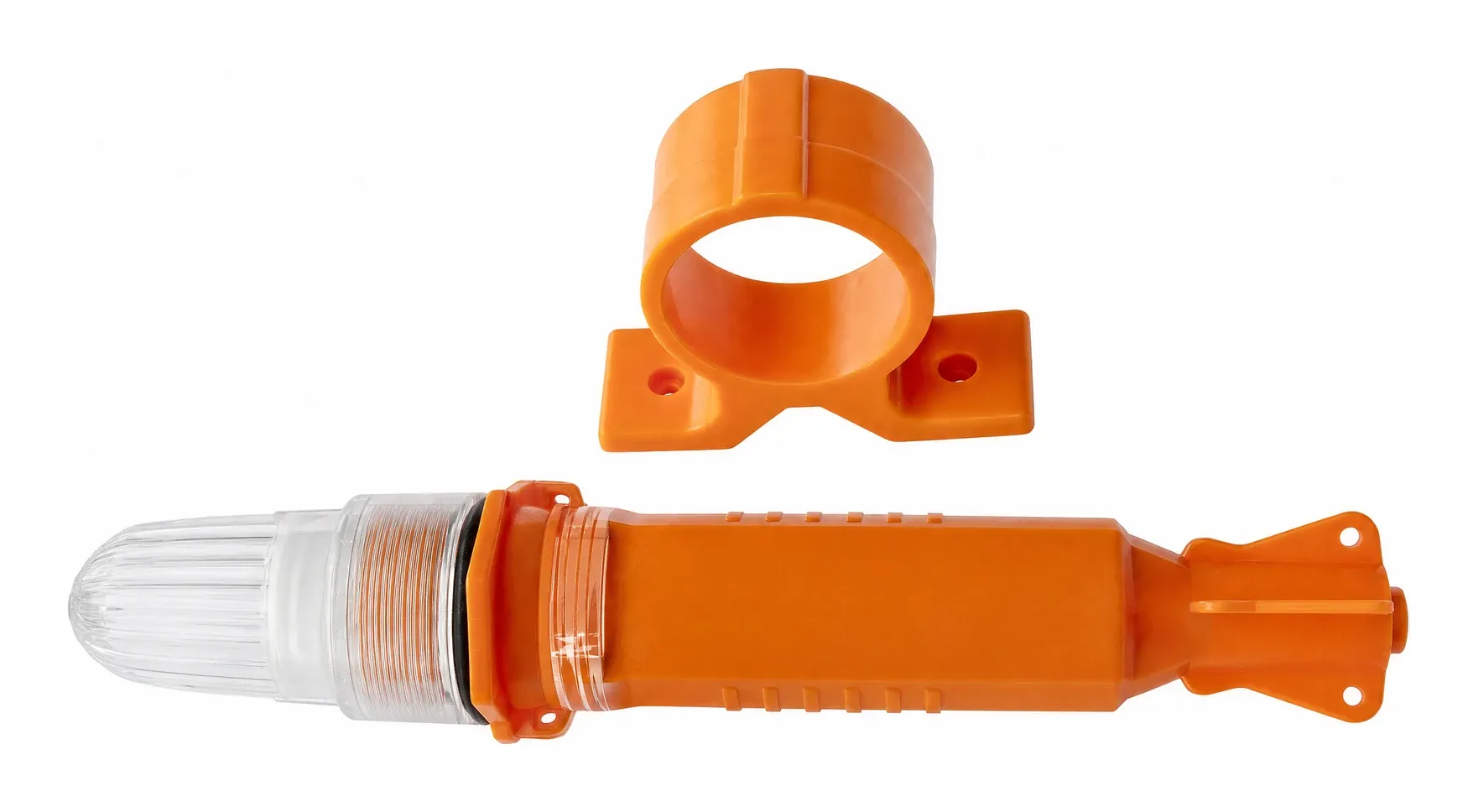
Lifebuoy Light (S.I. Light) – MMLBL
Model MMLBL
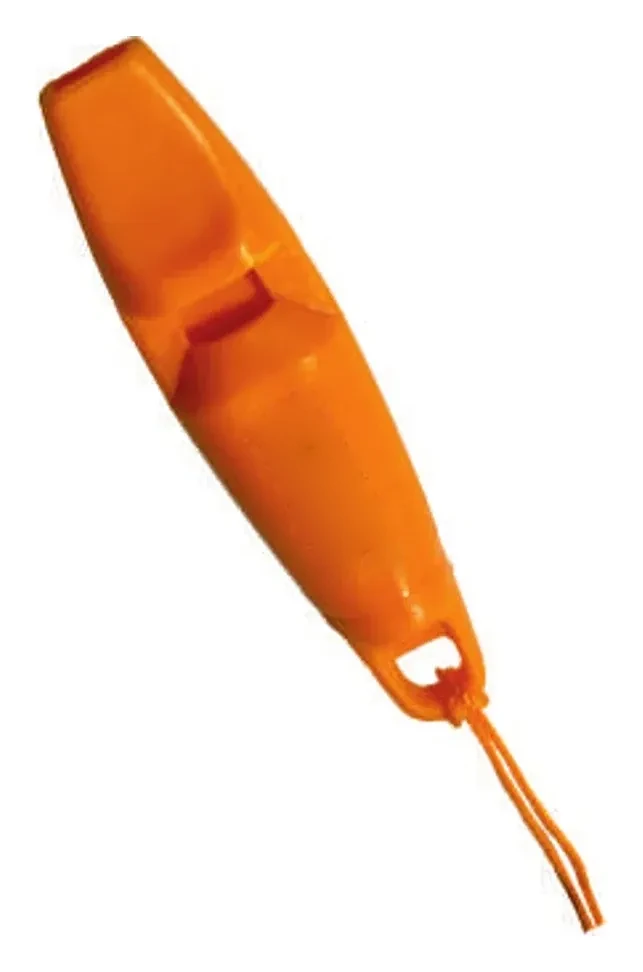
Life Jacket Whistle – MMLJW
Model MMLJW
Every figure in the table is the LSA Code’s requirement; MM’s figures are its catalogue data. Approvals are as stated by MM Techno Plast; see what the approvals demand. Request a quote.