
 Vasai, Maharashtra
A generated illustration
What an approval demands.
IRS type-approved, as stated by MM
Life jackets: MMLJ and Sigma
SOLAS LSA Code 2.2 · tested to IMO MSC.81(70)
A SOLAS life jacket is approved on what it does to a person in the water, not on how it looks. These are the tests the Code sets.
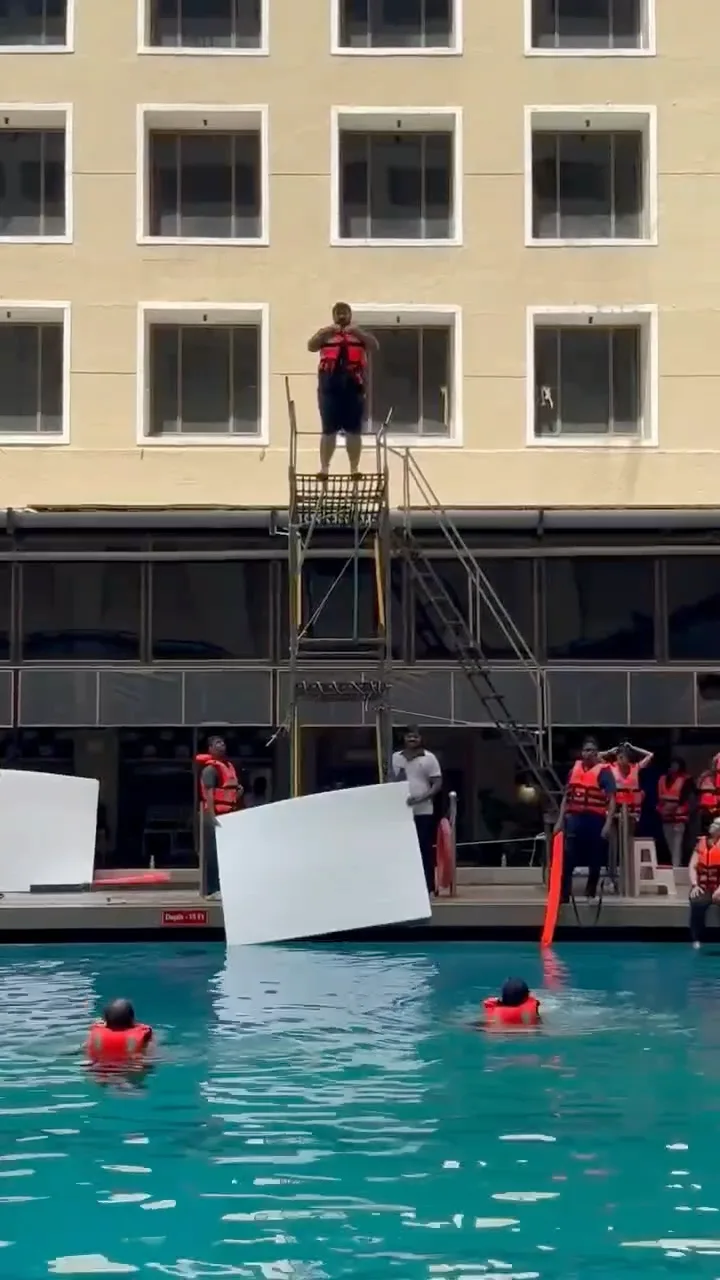 From MM’s own film of the jump test.
- 4.5 mThe wearer jumps into the water from at least this height, without injury and without the jacket coming off or being damaged.
- 5 sTurns an unconscious wearer from any position until the mouth is clear of the water.
- 120 mmHolds the mouth of an exhausted or unconscious person at least this far clear of the water.
- 24 hSubmerged in fresh water, it may lose no more than 5% of its buoyancy.
- 1 minAt least 75% of people who have never seen it put it on correctly, with no help.
- 2 sWrapped in fire; it does not go on burning or melting.
- 3,200 NHeld on the body fastening for 30 minutes after a soak, with no damage. 900 N at the shoulder.
- 240 NMMLJ buoyancy, for wearers up to 140 kg, in MM’s listing.MM’s figure
- 150 kgThe wearer in MM’s filmed 4.5 m jump test, as stated by MM.MM’s figure
See the MMLJSee the SigmaSee the SOLAS life jacket tests, explained
IRS type-approved, as stated by MM
Lifebuoy: MMLB 2.5
SOLAS LSA Code 2.1.1
A ring has to survive being thrown from the highest deck, and then hold a person up for a day. (The MMLB 4 is CE, as stated by MM.)
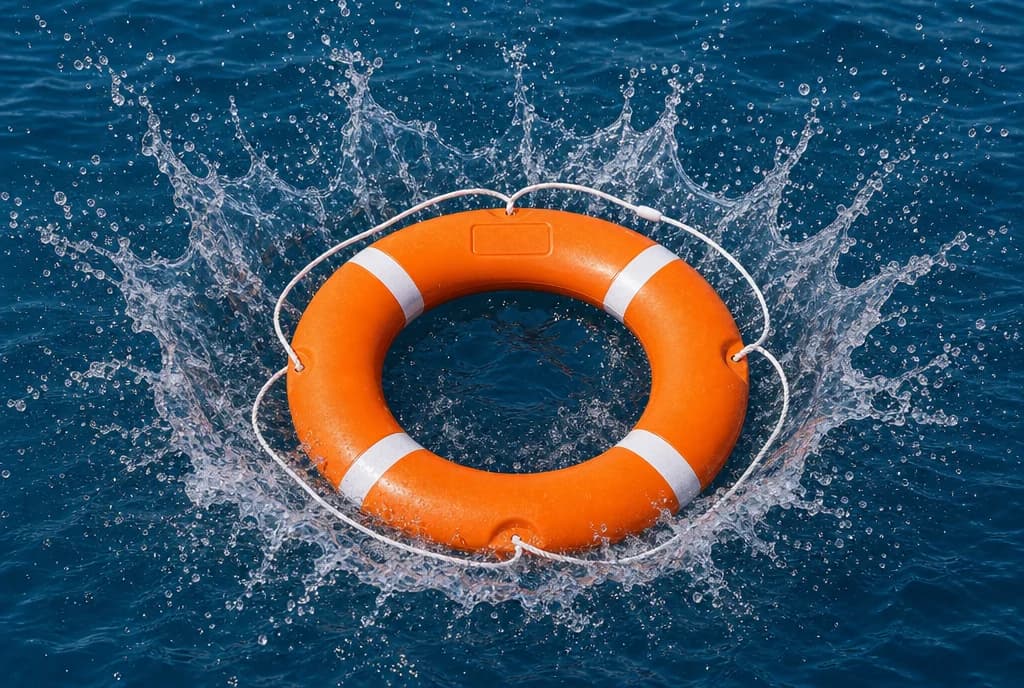 A generated illustration, made from MM’s photograph of the lifebuoy.
- 30 mDropped into the water from its stowage height or 30 m, whichever is greater, and still fit for use.
- 14.5 kgOf iron, held up in fresh water for 24 hours.
- 2.5 kgMinimum mass, so it carries when thrown. MM lists 2.8 kg and 4.0 kg.
- 800 mmLargest outer diameter allowed; 400 mm the smallest inner. MM lists 720 and 420 mm.
- 2 sWrapped in fire; it does not go on burning or melting.
- 9.5 mmGrab line, four times the ring’s outer diameter long, fixed at four points.
- 180 NBuoyancy in MM’s listing.MM’s figure
IRS type-approved, as stated by MM
Lifebuoy S.I. light: MMLBL
SOLAS LSA Code 2.1.2
The light goes overboard with the ring, at night, and has to be burning when it lands.
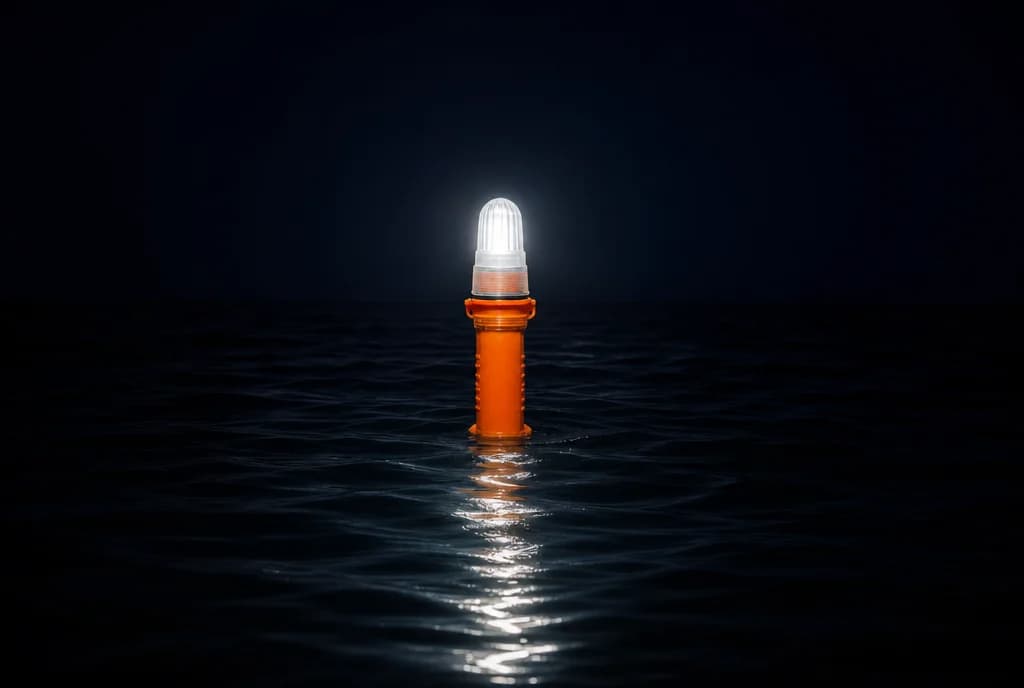 A generated illustration, made from MM’s photograph of the light.
- 2 cdWhite light of at least this intensity in every direction of the upper hemisphere.
- 2 hMinimum burn time. MM lists 8 hours on its lithium battery.
- 50–70Flashes a minute, if it is a flashing light. MM lists 70.
- 30 mThe same drop into the water as the lifebuoy it serves.
- WaterCannot put it out: it is built so water cannot extinguish it.
- On contactWater-activated, and rises above the surface when immersed, in MM’s listing.MM’s figure
IRS type-approved, as stated by MM
Life jacket whistle: MMLJW
SOLAS LSA Code 2.2.1 · ISO 12402-8
Over wind, engines and sea, a voice does not carry. A whistle has to, wet, in a tired hand.
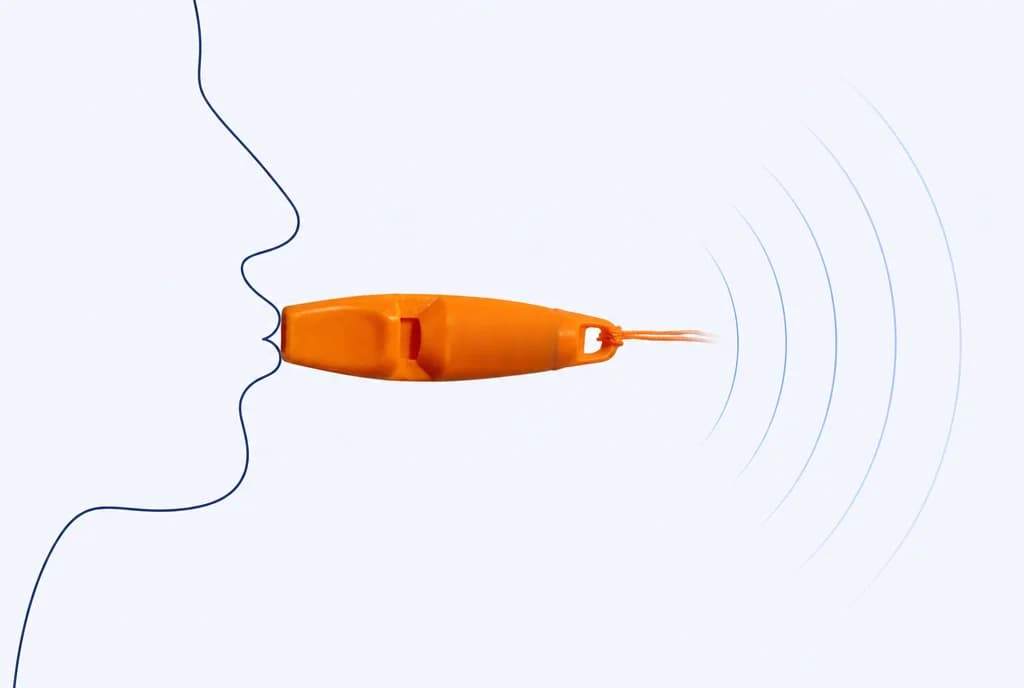 A generated illustration, made from MM’s photograph of the whistle.
- 100 dB(A)Sound level to exceed, measured 5 metres directly in front of the whistle.
- 2 kHzPredominant pitch, within 1 kHz either way, and multi-tone, so it cuts through noise.
- WetSounds in air immediately after being held under fresh water.
- 0Moving parts. Non-metallic, robust and free of burrs.
- On a cordTied to the jacket, long enough to reach the mouth.
- Either way upWorks whichever way it is held, in MM’s listing.MM’s figure
IRS type-approved, as stated by MM
Buckle: MMB42
IMO MSC.81(70) strength test · ISO 12402-7 components
The buckle is the part that keeps the jacket on the person. The jacket’s strength test runs straight through it.
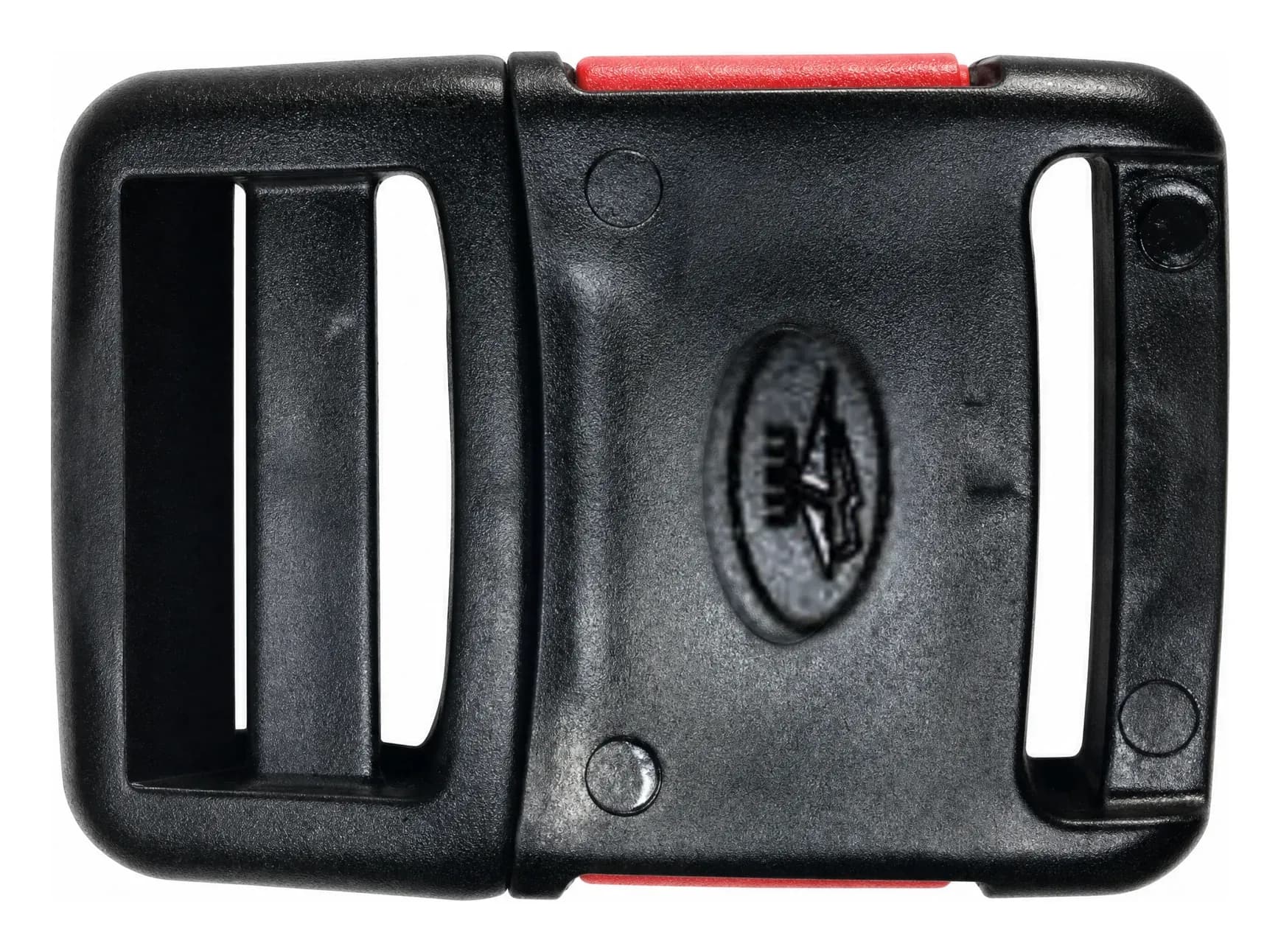 MM’s MMB42 buckle.
- 3,200 NThe load the jacket’s body fastening holds in the SOLAS strength test, with no damage.
- 30 minHow long that load stays on.
- 2 minIn water first, so it is tested wet.
- 900 NThe same test at the shoulder of the jacket.
- 3000 N+The buckle’s own breaking load to ISO 12402-7, as stated by MM; a separate test from the jacket’s.MM’s figure
BIS certified, ISI marked, as stated by MM
Safety helmets: CH01 and CH02
IS 2925:1984, industrial safety helmets
A helmet is tested hot, cold and wet, then hit, pierced, burned and electrified.
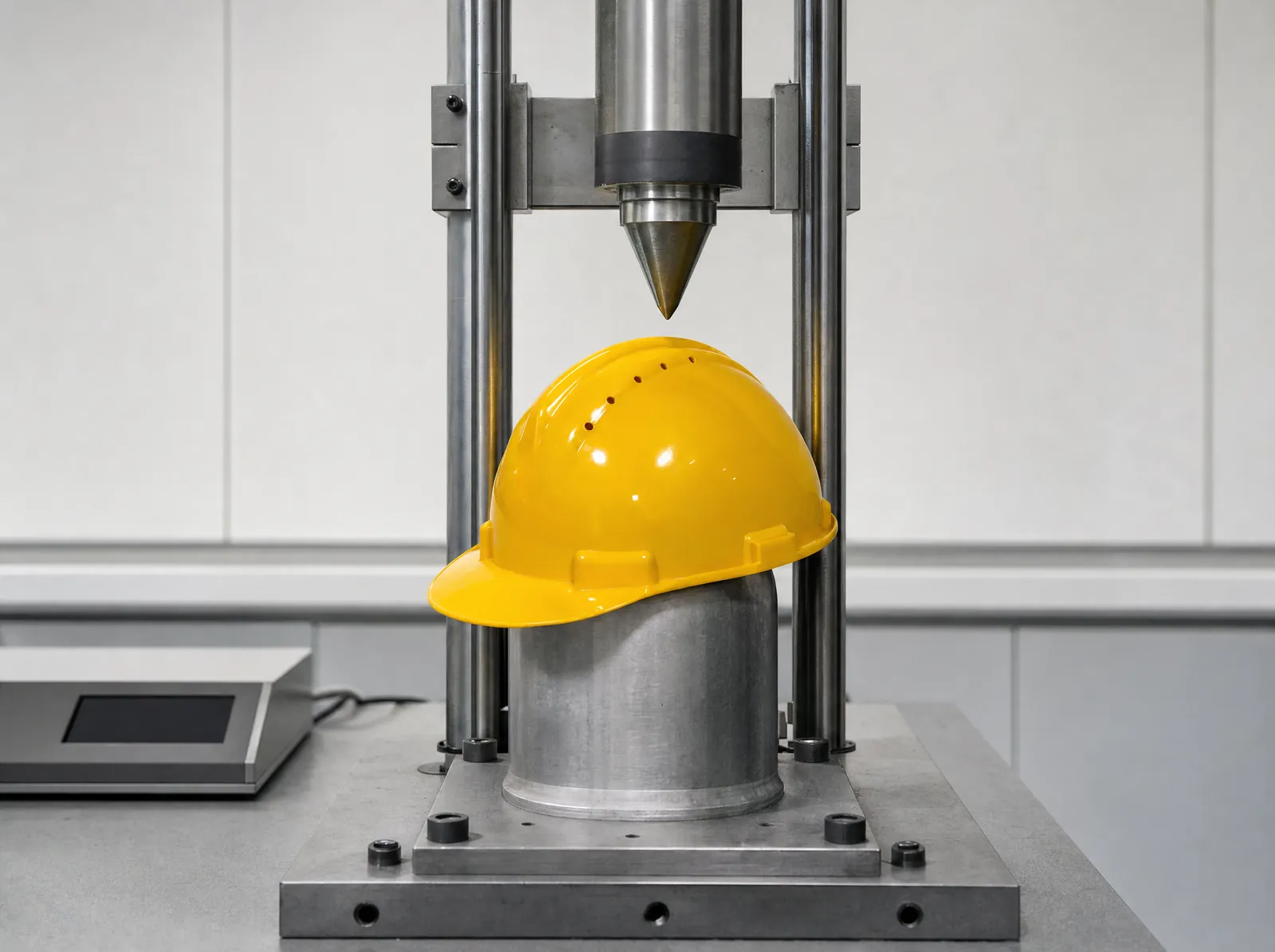 The penetration test. A generated illustration.
- 5 kNMost force allowed through to the head when a 3 kg striker falls 1.5 m onto the shell.
- 3 mA 500 g steel cone is dropped point-first; it may not touch the headform.
- 5 sAfter 10 seconds in a flame, the shell stops burning within this time.
- 2,000 VApplied for one minute; no more than 3 mA may leak through.
- 93 °CFor 15 minutes, with no distortion or softening.
- 5%Most water the shell may take up, by mass.
- 50 / −10 °CConditioned hot, cold or under running water for 4 hours before testing.
- 345 gCH01 weight, approx., in MM’s listing; the standard allows up to 400 g.MM’s figure
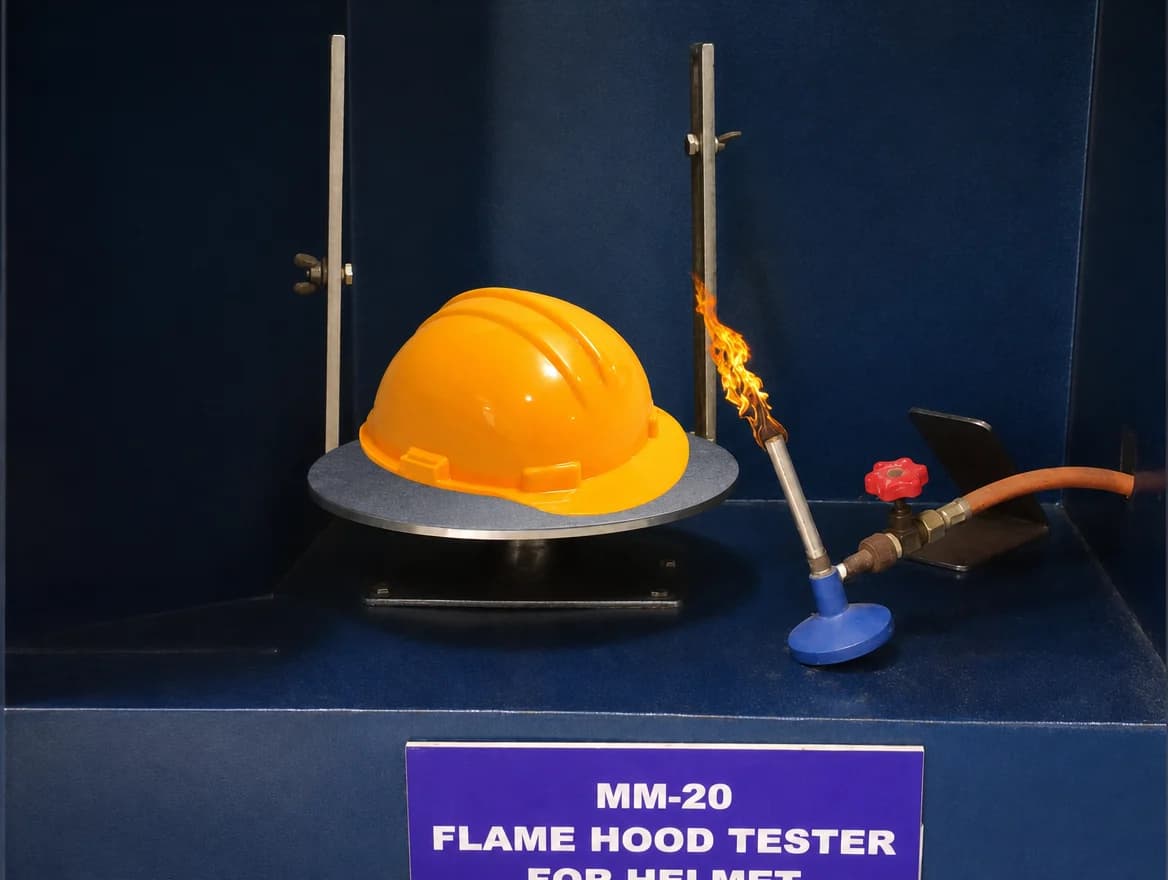 Flame hood test. MM’s photograph, enhanced for clarity.
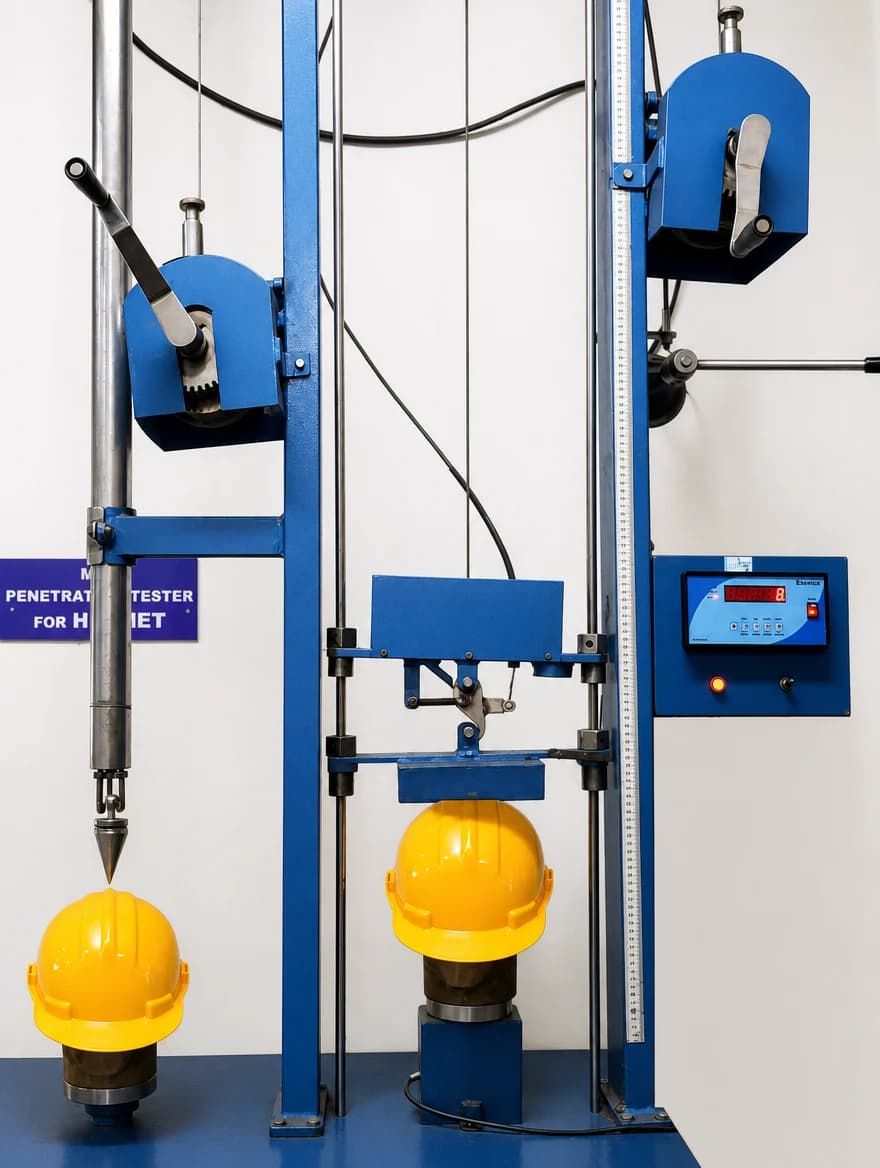 Penetration and drop test. MM’s photograph, enhanced for clarity.
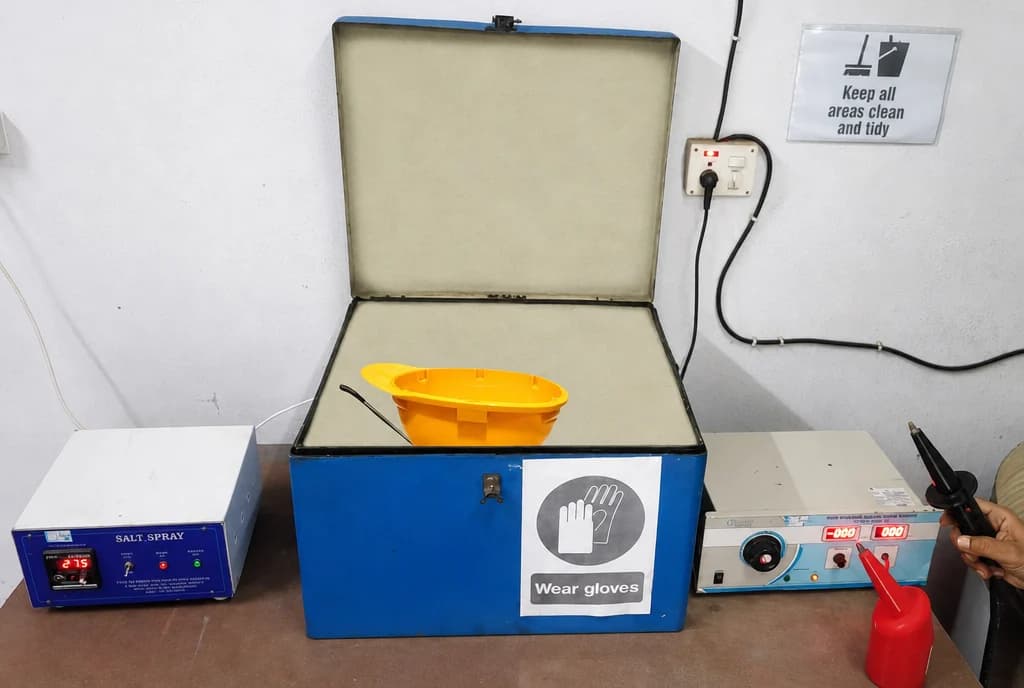 Voltage and salt spray test. MM’s photograph, enhanced for clarity.
See the Safety helmetsSee the IS 2925 helmet tests, explained
Sources
Where the figures come from.
The figures above are the standards’ own requirements, summarised; the standards themselves govern. Tiles marked “MM’s figure” are from MM’s product listing or as stated by MM. Approvals are as stated by MM Techno Plast, and listed on the register.
International Life-Saving Appliance (LSA) Code, IMO Resolution MSC.48(66), chapter II, as amended
IMO Resolution MSC.81(70), Revised recommendation on testing of life-saving appliances, as amended
ISO 12402-8:2020, Personal flotation devices: accessories
IS 2925:1984, Specification for industrial safety helmets (Bureau of Indian Standards)