

 Vasai, Maharashtra
Search for “lifebuoy” in India and most of what comes back is soap. On a ship, a lifebuoy is the ring thrown to a person in the water, also called a life buoy ring, a ring buoy or a lifebelt. This post sets out what the SOLAS rules ask of one, so a specification can be written against the rule rather than against a photograph.
Which rules apply
Ships under the International Convention for the Safety of Life at Sea (SOLAS) carry lifebuoys under chapter III of the convention, which says how many and how they are fitted out. The ring itself must meet section 2.1.1 of the International Life-Saving Appliance (LSA) Code, and is tested to IMO Resolution MSC.81(70). Fishing boats and inland craft come under national and state rules instead; the SOLAS vs non-SOLAS guide explains the difference.
What the LSA Code asks of the ring
- An outer diameter of no more than 800 mm and an inner diameter of no less than 400 mm.
- A mass of not less than 2.5 kg (LSA Code 2.1.1.4).
- A mass of not less than 4 kg for a lifebuoy intended to operate the quick-release arrangement for the self-activated smoke signal and self-igniting light (LSA Code 2.1.1.7, as amended by IMO Resolution MSC.207(81)).
- Enough buoyancy to hold up 14.5 kg of iron in fresh water for 24 hours.
- No burning or melting on after being wrapped in fire for 2 seconds.
- A drop into the water from its stowage height or 30 m, whichever is greater, without losing its performance or that of anything attached to it.
- A grab line at least 9.5 mm thick and at least four times the ring’s outer diameter long, fixed at four equally spaced points to form four equal loops.
- Like every life-saving appliance, a highly visible colour, with retro-reflective material where it helps a searcher find it.
How the MMLB lifebuoy reads against it
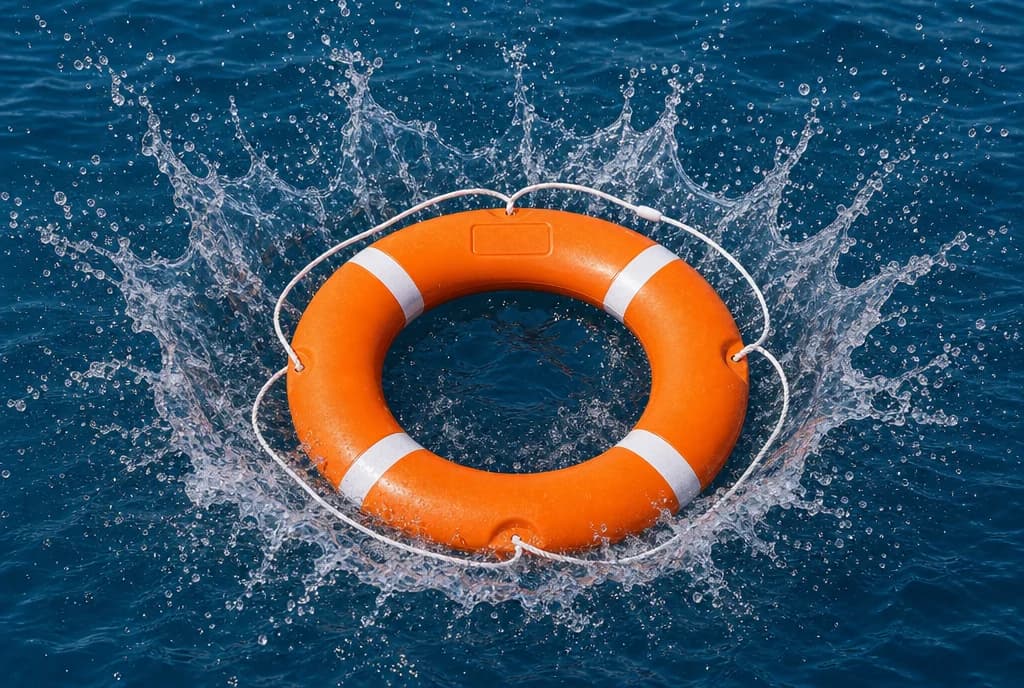
MM lists the MMLB in two weights, the MMLB 2.5, with IRS type approval, and the MMLB 4, with CE, as stated by MM; every standard MM declares for it is listed on the MMLB product page. The figures below are MM’s catalogue data; set them beside the limits above, including the two minimum masses, and let the vessel’s survey decide which weight is called for.
| Specification | Value |
|---|---|
| Outer diameter | 720 mm |
| Inner diameter | 420 mm |
| Depth | 100 mm |
| Weight | 2.8 kg (MMLB 2.5), 4.0 kg (MMLB 4) |
| Buoyancy | 180 N |
| Drop height | 30 m |
| Shell | Highly visible orange high-density polyethylene, filled with polyurethane foam |
| Reflective tape | SOLAS reflective tape |
| Grab line | Through four equally spaced points, both ends fitted for strength |
| UV | Built-in UV inhibitors against fading |
| Optional accessories | Stainless steel lifebuoy bracket; orange floating lifeline, 8 mm × 30 m; lifebuoy S.I. light |
How many lifebuoys does a ship need?
SOLAS sets the minimum by the ship’s length. These are the convention’s figures; a flag administration or survey can ask for more.
| Length of ship | Minimum lifebuoys |
|---|---|
| Under 100 m | 8 |
| 100 m to under 150 m | 10 |
| 150 m to under 200 m | 12 |
| 200 m and over | 14 |
| Length of ship | Minimum lifebuoys |
|---|---|
| Under 60 m | 8 |
| 60 m to under 120 m | 12 |
| 120 m to under 180 m | 18 |
| 180 m to under 240 m | 24 |
| 240 m and over | 30 |
Lights, smoke signals, lifelines and marking
- At least half of a ship’s lifebuoys carry a self-igniting light, and at least two of those also carry a self-activating smoke signal and can be released quickly from the navigating bridge.
- At least one lifebuoy on each side carries a buoyant lifeline at least twice as long as the height it is stowed above the lightest seagoing waterline, or 30 m, whichever is greater.
- Each lifebuoy is marked in block capitals with the name and port of registry of the ship that carries it.
The light must give at least 2 candela in every direction of the upper hemisphere for at least 2 hours, flashing 50 to 70 times a minute if it flashes. The smoke signal must give off smoke of a highly visible colour for at least 15 minutes. The lifeline must not kink, must be at least 8 mm thick and must have a breaking strength of at least 5 kN. The lights post compares the lifebuoy light with the life jacket light.
MM lists the MMLBL lifebuoy light as water-activated: it comes on by itself on contact with water and pops up above the surface. MM gives it 2 cd, 70 flashes a minute and 8 hours on a lithium battery. The MMBLL buoyant lifelines come in 25 m and 30 m lengths of 8 mm polypropylene with a 6 kN breaking strength, and a nylon handle strap lets a rescuer hold the line firmly at one end. On a SOLAS ship, check the line against the 30 m rule: the MMBLL30 meets that minimum, and a ring stowed more than 15 m above the waterline needs a longer line. MM lists no smoke signal.
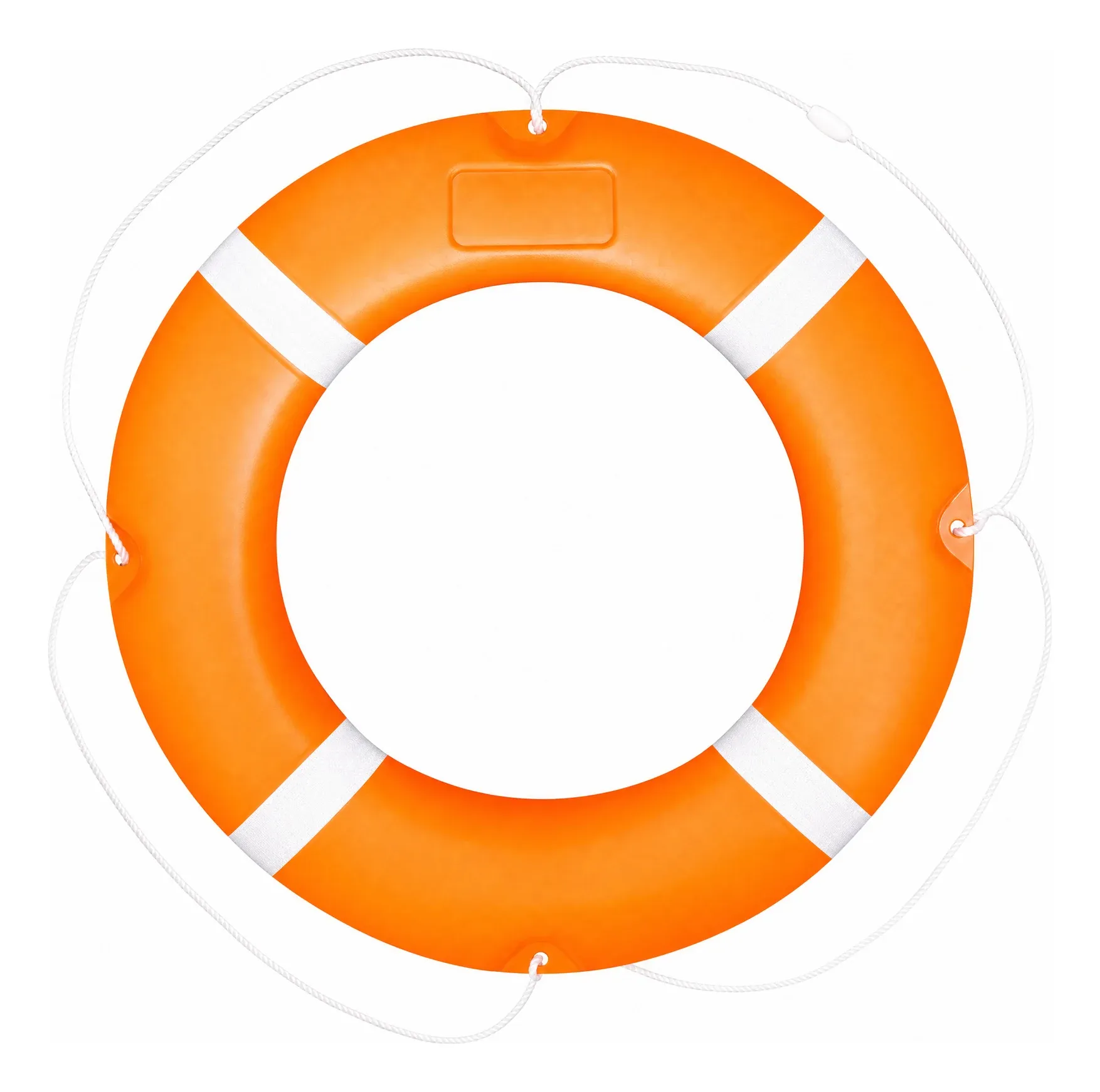
MM Lifebuoy Model: MMLB 2.5 & MMLB 4
Model MMLB-2.5 / MMLB-4
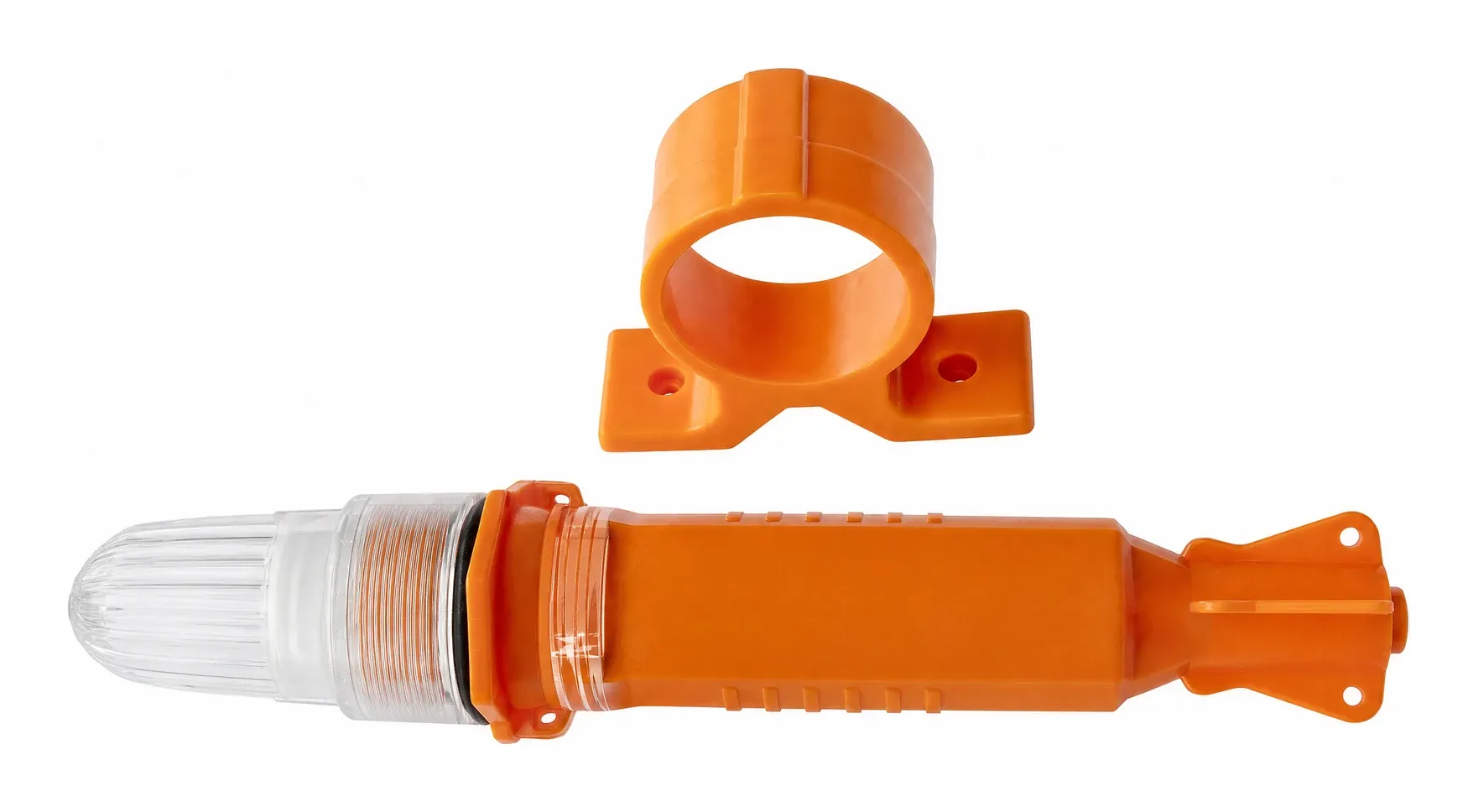
Lifebuoy Light (S.I. Light) – MMLBL
Model MMLBL
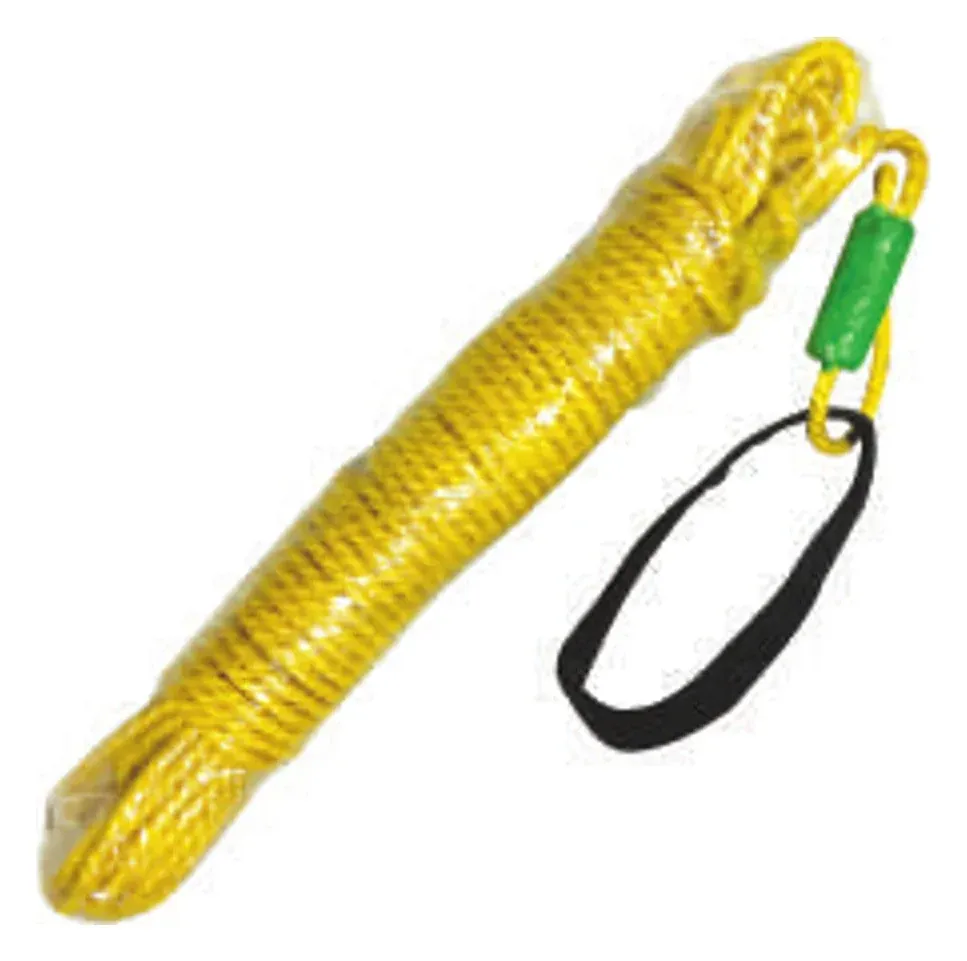
Buoyant Lifeline – MMBLL25 & MMBLL30
Model MMBLL25 / MMBLL30
What to put in the purchase order
- The model and its weight class: MMLB 2.5 or MMLB 4.
- The approval required, and a request for the certificate number and its validity dates.
- How many rings need a light, how many a smoke signal, and how many a lifeline, with the line length.
- The ship’s name and port of registry, if the rings are to be marked before they go aboard.
Approvals named are as stated by MM Techno Plast; the certification register says which MM holds a certificate for, and what the approvals demand shows the lifebuoy tests. Request a quote with the quantity and fit-out.