

 Vasai, Maharashtra
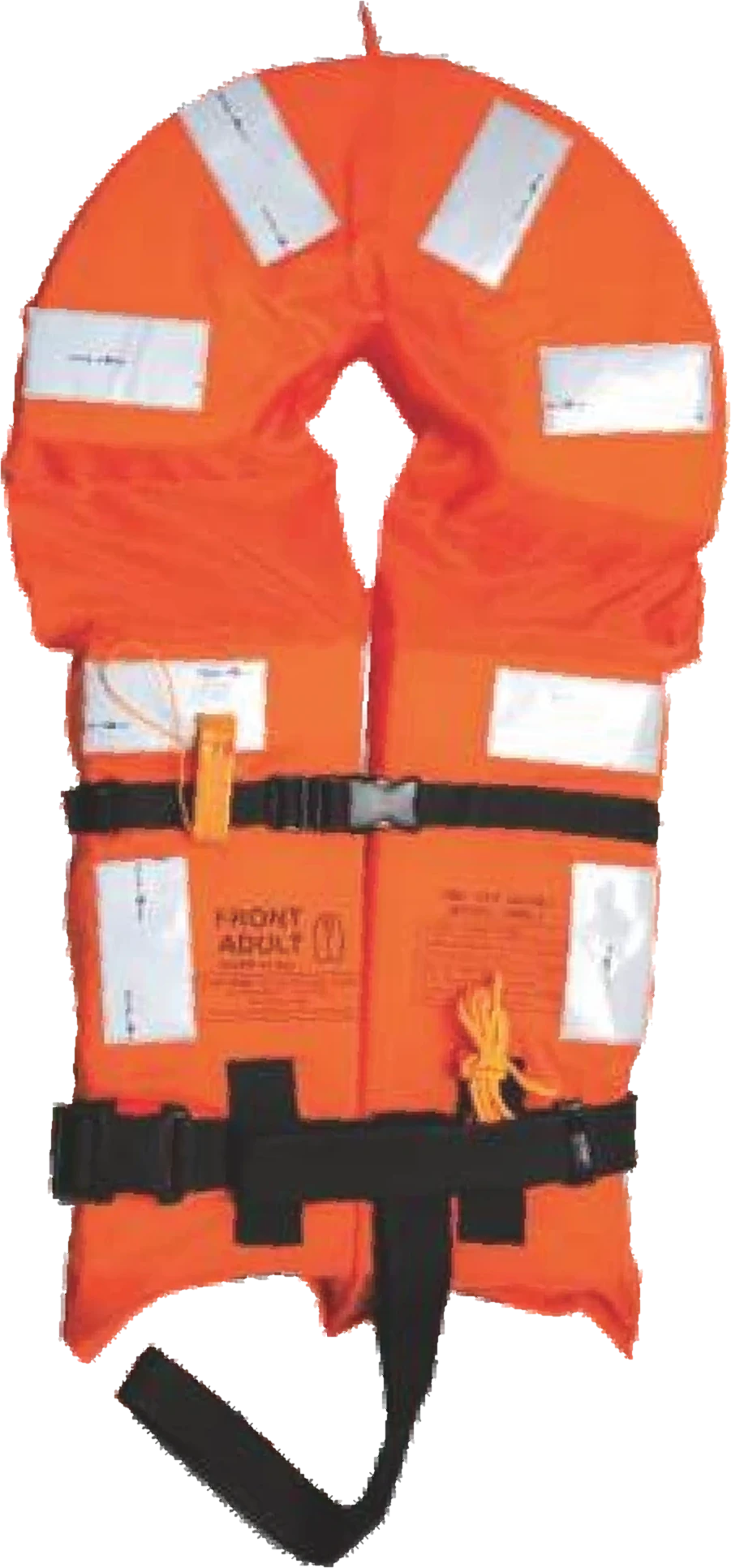
A SOLAS life jacket is approved on what it does for a person in the water, not on how it looks. The rules are in section 2.2 of the International Life-Saving Appliance (LSA) Code, and the tests that prove them are in IMO Resolution MSC.81(70).
Who needs a SOLAS life jacket?
Ships under SOLAS carry a life jacket for every person on board, in the sizes the people aboard need. Fishing boats, small craft and inland vessels come under national and state rules, and many carry jackets listed against EN ISO 12402 instead; the SOLAS vs non-SOLAS guide sets out the difference and the PFD types guide explains the classes.
What it must do in the water
- Turn an unconscious, face-down wearer until the mouth is clear of the water, on average no slower than the IMO reference test jacket (RTD) worn by the same test subjects, and leave no more people unturned than the RTD does.
- Lift the mouth of an exhausted or unconscious person clear of the water, with the freeboard measured against the same reference jacket. (Before 1 July 2010 the Code set fixed limits of 5 seconds and 120 mm; resolution MSC.207(81) replaced them with the RTD comparison.)
- Lose no more than 5% of its buoyancy after 24 hours submerged in fresh water.
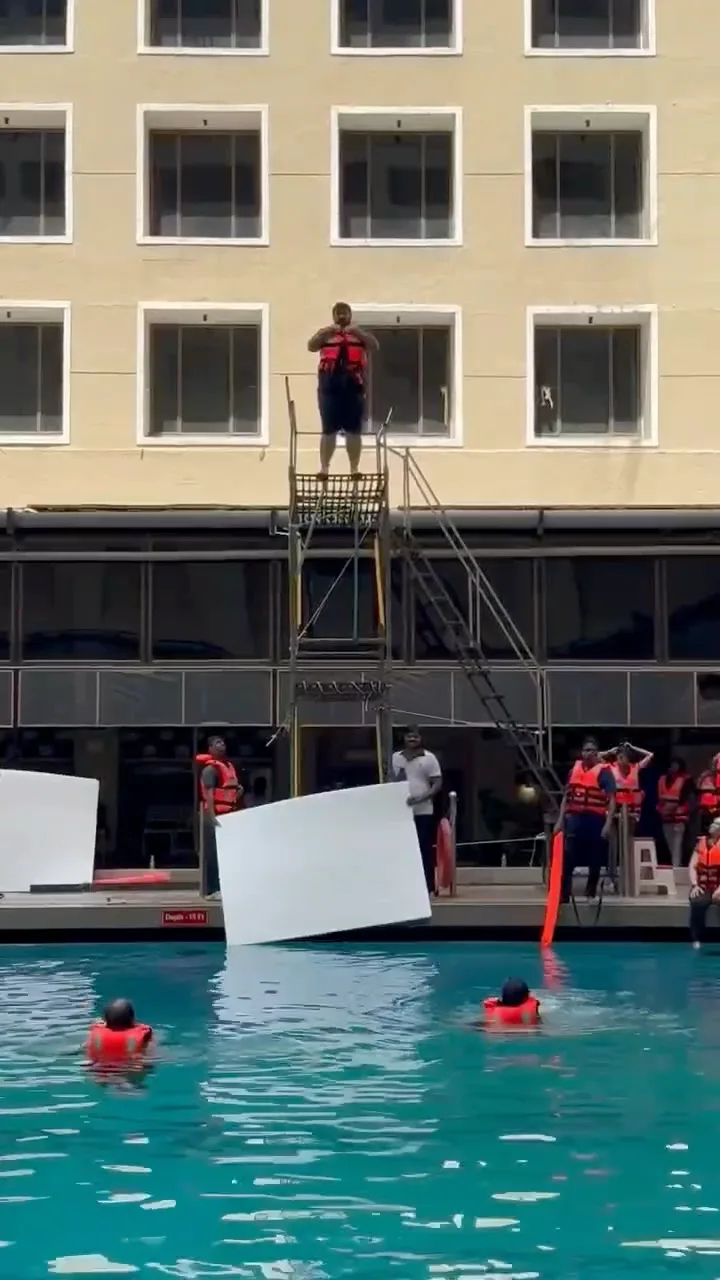
- Let the wearer jump into the water from at least 4.5 m without injury, and without the jacket coming off or being damaged.
- Not go on burning or melting after being wrapped in fire for 2 seconds.
Putting it on, and keeping it on
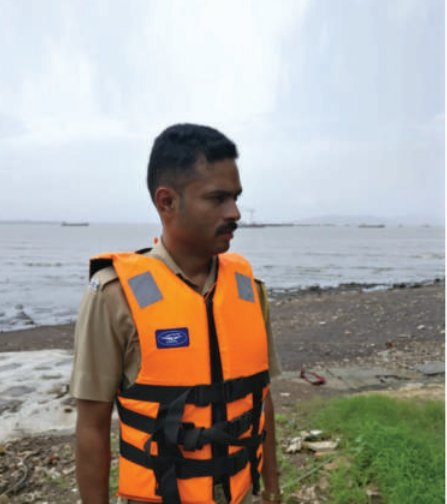
At least 75% of people who have never seen the jacket before must put it on correctly within one minute, with no help. Then it has to stay on: in the strength test the body fastening holds 3,200 N for 30 minutes after a soak, and the shoulder 900 N, with no damage. The buckle is the part that carries that load; the standards page shows the test beside MM’s MMB42 buckle.
The light, the whistle and the colour
- A white light of at least 0.75 candela in every direction of the upper hemisphere, for at least 8 hours. If it flashes, 50 to 70 times a minute, with a manual switch.
- A whistle tied to the jacket by a cord. ISO 12402-8, the standard for life jacket accessories, asks for more than 100 dB(A) measured 5 m in front of it.
- A highly visible colour, and retro-reflective material where it helps a searcher find the wearer.
Sizes: infant, child and adult
Since IMO Resolution MSC.207(81), the Code sorts life jackets into infant, child and adult sizes by the wearer’s weight and height, and each jacket is marked with its size by weight, height or both; the sizes post has the table and sets MM’s range against it.
MM products that name IRS type approval
- Heavy Side Release Buckle – MMB42: IRS Type Approval, CE.
- MM Life Jacket Model: MMLJ: IRS Type Approval.
- MM Life Jacket Model: SIGMA: IRS Type Approval, CE.
- Life Jacket Whistle – MMLJW: IRS Type Approval, CE.
- Lifebuoy Light (S.I. Light) – MMLBL: IRS Type Approval, CE.
- MM Lifebuoy Model: MMLB 2.5 & MMLB 4: IRS Type Approval, CE, MED Directive 2014/90/EU.
What to ask for with the order
- The type approval certificate: the issuing body, its number, its validity dates, and the model it names, which should be the model quoted.
- The size of each jacket, by weight and height, and how many of each.
- Whether the light and whistle are fitted, and the light’s battery date.
- The documents that will travel with the goods.
Every figure on this page is the standard’s requirement, not an MM test result, except where it is marked as MM’s. Request a quote with the quantity and sizes.
Sources: IMO, SOLAS 1974, IMO Resolution MSC.48(66), the LSA Code, IMO Resolution MSC.81(70), LSA testing, IMO Resolution MSC.207(81), LSA Code amendments.