

 Vasai, Maharashtra
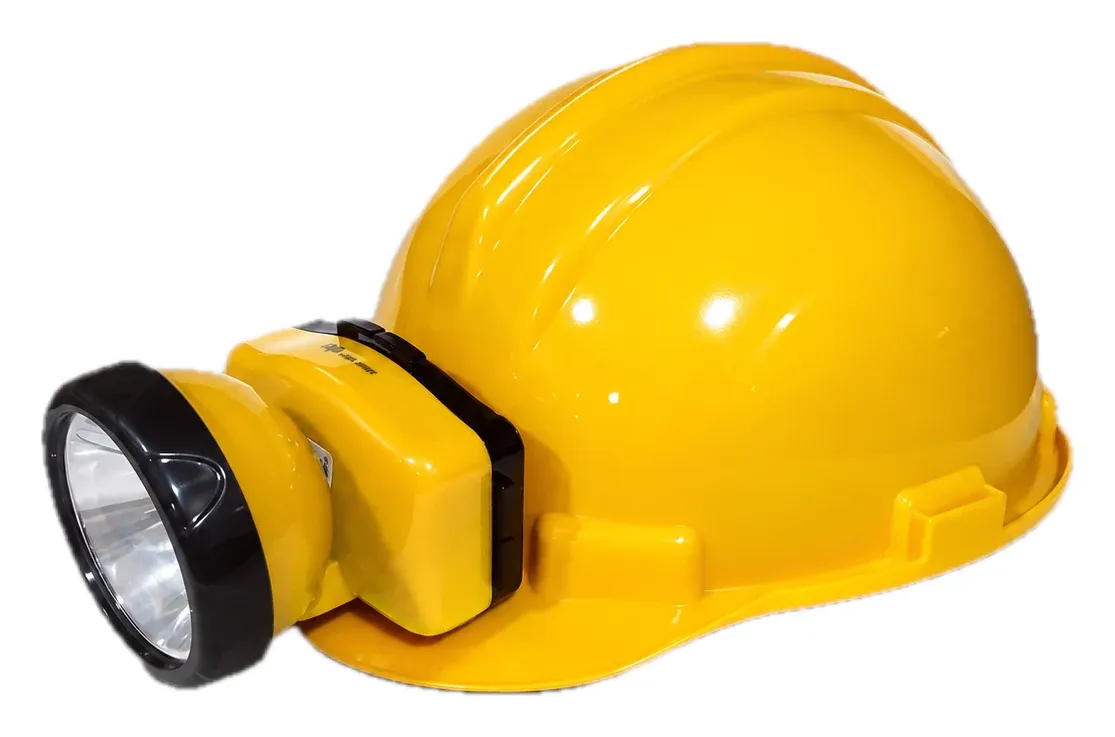
A hand torch takes a hand. Working inside a ship’s hold, under a jetty or on a night shift, both hands are needed for the ladder, the tool or the line, and the light has to go where the eyes go. A lamp on the helmet does that.
Where does a helmet lamp help?
Wherever both hands are busy and there is no fixed light:
- Night work on deck, on a quay or on a site, where floodlights leave shadows behind every stack and corner.
- Ship holds, tanks and void spaces, where there is no fixed light and a hand torch is awkward on a ladder.
- Tunnels, culverts, drains and basements during inspection or maintenance.
- Power cuts and emergencies: moving people out of a dark building or a vessel’s lower decks.
- Engine rooms and under-floor spaces, for looking into a tight corner with both hands on the job.
The lamp also makes the wearer easier to see. On a dark quay or a deck with cranes and vehicles moving, a light at head height shows where a person is and which way they are facing. It does not replace high-visibility clothing; wear both.
A helmet lamp is a light, not a gas detector or a permit. A ship’s hold or tank is an enclosed space: test the atmosphere and follow the entry permit before anyone goes in, lamp or no lamp.
How long does the lamp run on a charge?
The lamp on the MM helmet is model DP-744C, with an 800 mAh battery. It runs for 2.5 h on strong or 7 h on weak. Plan a shift around those figures: use weak for walking and general work, switch to strong only for the moment a distant object or a dark corner needs it, and the charge lasts much longer. For a full night shift on strong, keep a second charged helmet or lamp ready to swap.
| Specification | Value |
|---|---|
| Material | HDPE / ABS |
| Head size | 53–63 cm |
| Head band | Ratchet (push and pull) or 6-hole nape |
| Harness | 6-point suspension |
| Chin strap | Adjustable polyester, soft-weave terylene webbing |
| Sweatband | Replaceable terry towelling (optional) |
| Ventilation | Also available with ventilation holes |
| Lamp | Model DP-744C, 800 mAh battery |
| Charging | 12 h, from AC 100–240 V, 50/60 Hz |
| Running time | 2.5 h (strong) or 7 h (weak) |
How should the lamp be charged?
A full charge takes 12 h, from AC 100–240 V, 50/60 Hz, so it works from a normal socket ashore or a ship’s supply. Twelve hours on charge means a lamp that has run one shift will not be full for the next unless it charges in between: put it on charge at the end of each shift, and keep enough helmets that one set charges while the other works.
- Charge in a dry place, never with a wet lamp or a damp socket.
- Do not leave a flat lamp uncharged for weeks; charge it before it goes into store.
- Check the lamp lights on both settings before the shift starts, not in the dark.
How do you look after a helmet with a lamp?
Treat it as a helmet first. Check the shell for cracks and the harness for wear as with any helmet, keep the lamp clean and the lens clear, and wipe salt and grime off the lamp housing. Do not drill the shell or glue anything to it to fix a lamp: holes and solvents weaken a helmet. The helmet’s own figures: HDPE / ABS shell, 53–63 cm head size, a 6-point suspension, and a ratchet or 6-hole nape headband. It is also available with ventilation holes.
Where should a helmet lamp not be used?
In any area where flammable gas, vapour or dust may be present, such as a mine, a fuel tank, a cargo tank or a grain silo, only a lamp certified for that hazardous zone may be used. This lamp carries no such rating. Use it where an ordinary electric light is allowed.
Helmet standards, classes and the colour code are covered elsewhere: the IS 2925 helmet standard and ISI mark, helmet types and classes and the ratchet or nape headband.
MM Safety Helmet with Lamp
Head Protection & PPE
Request a quote with the number of helmets, the shell colour and the headband type.