


 Vasai, Maharashtra
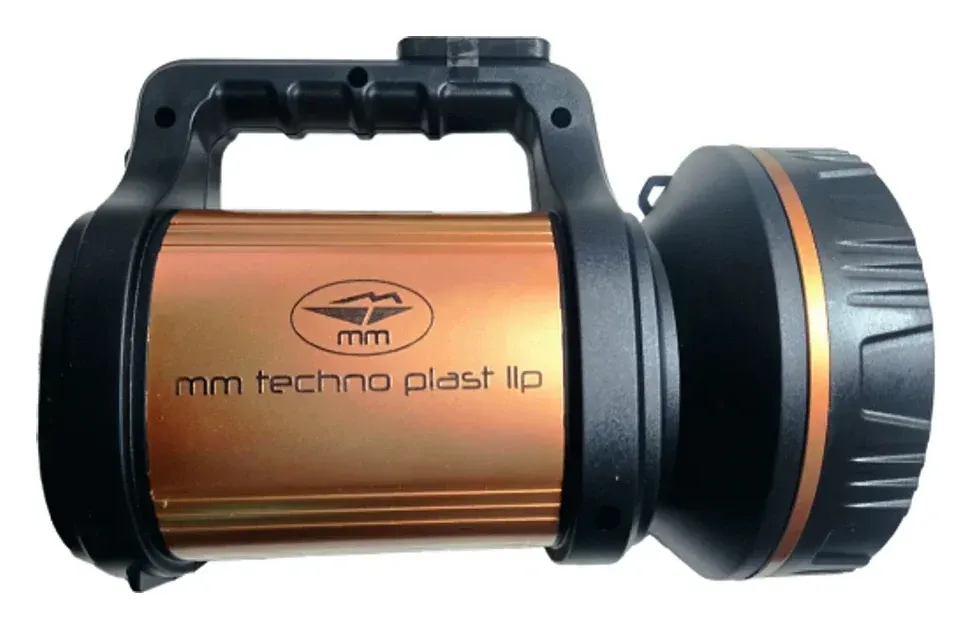
Navigation lights let other boats see you. A search light lets you see: a mooring buoy in the dark, a net end, the edge of a channel, a person in the water. On a small boat without a fixed searchlight, a handheld rechargeable light is often the only beam aboard.
What is a search light used for on a boat?
It is used to find things the deck lights cannot reach. The common jobs:
- Picking up a mooring or coming alongside a jetty after dark, when the buoy, the bollards and the gap are all black.
- Finding a net end, a marker float or a pot line during a night haul.
- Checking the water ahead for logs, unlit boats and floating gear before entering a creek or harbour mouth.
- Searching for a person who has gone overboard, and keeping them in sight once found.
- Inspecting the hull, the propeller area or a fouled line over the side.
The COLREGs allow a vessel to direct its searchlight towards a danger to draw another vessel’s attention to it (Rule 36), so long as the beam does not embarrass that vessel. Never hold a beam on another boat’s wheelhouse. It blinds the person steering.
What makes a good beam?
A narrow, concentrated spot reaches further and picks out a small object, such as a head in the water or a reflective patch on a life jacket. A wide flood lights the area close to the boat for work on deck or alongside. For searching, reach and a tight spot matter more than spread. Retro-reflective tape on life jackets and lifebuoys returns a search light’s beam to the person holding it, which is why that tape is on them; the man overboard guide covers the rest of the drill.
Wattage tells you the power drawn, not how far the beam carries; the reflector and the lens shape decide that. Judge a light by switching it on at night across open water, not by the number on the box. The MMAPSL is a 100 W rechargeable LED search light.
What should you check in the battery and charging?
A rechargeable light is only as good as its charge when it is needed. The MMAPSL runs on Li-Ion cells, 18650 or 26650 (the numbers describe the cell size), with PWM charging. Its electronics carry protection against over-voltage, over-current, over-temperature, reverse polarity, over-charge and over-discharge. Over-charge and over-discharge protection matter most on a boat: the light is often left on charge in the wheelhouse, or run until it dies during a long search.
- Charge it after every use, not before the next trip.
- Keep it somewhere cool and dry; heat shortens the life of any Li-Ion cell.
- Switch it on during the daily check, so a flat or failed light is found in daylight.
- Carry a second light, or a headtorch, for the time when this one runs flat.
Handheld or fixed?
A fixed searchlight is mounted on the wheelhouse roof and turned from inside, by a handle through the roof or by remote control. It stays aimed while the skipper steers, and draws power from the boat. A handheld light needs no fitting and no wiring, can be carried to the bow, passed to a crew member or taken into a dinghy, and keeps working if the boat’s power fails. On small fishing boats and rescue craft the handheld light is the practical choice; on a larger vessel it is the back-up to the fixed one.
The MMAPSL is rechargeable, so it needs no wiring to the boat, and has a carry handle. A light that is carried about gets dropped on deck, so the drop figure matters: the MMAPSL with its battery passes a drop test from 1 m.
Where should it be kept?
Within reach of the helm, in a bracket or a fixed spot where everyone knows to find it, and back in that spot after every use. A light that has to be looked for in the dark is no use in a man overboard. Rinse salt off the body with fresh water after a wet night and dry it before charging.
Search Light – MMAPSL
Model MMAPSL
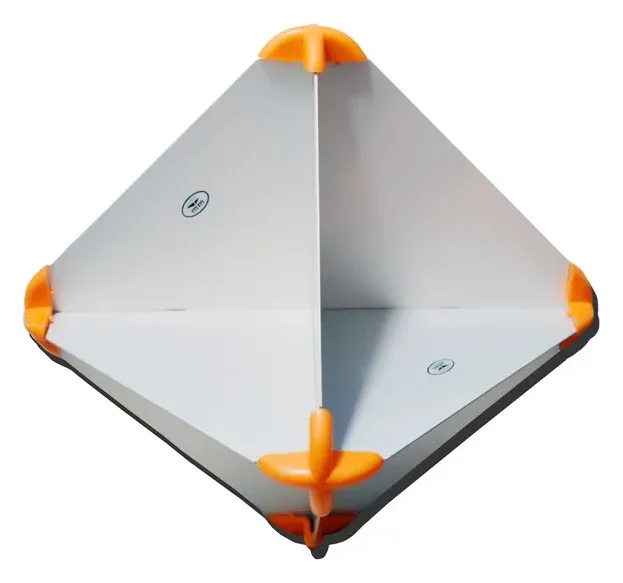
Radar Reflector
Model MMRR01
For the lights a boat must show, see the navigation lights guide. Request a quote for the MMAPSL with the quantity you need.