

 Vasai, Maharashtra
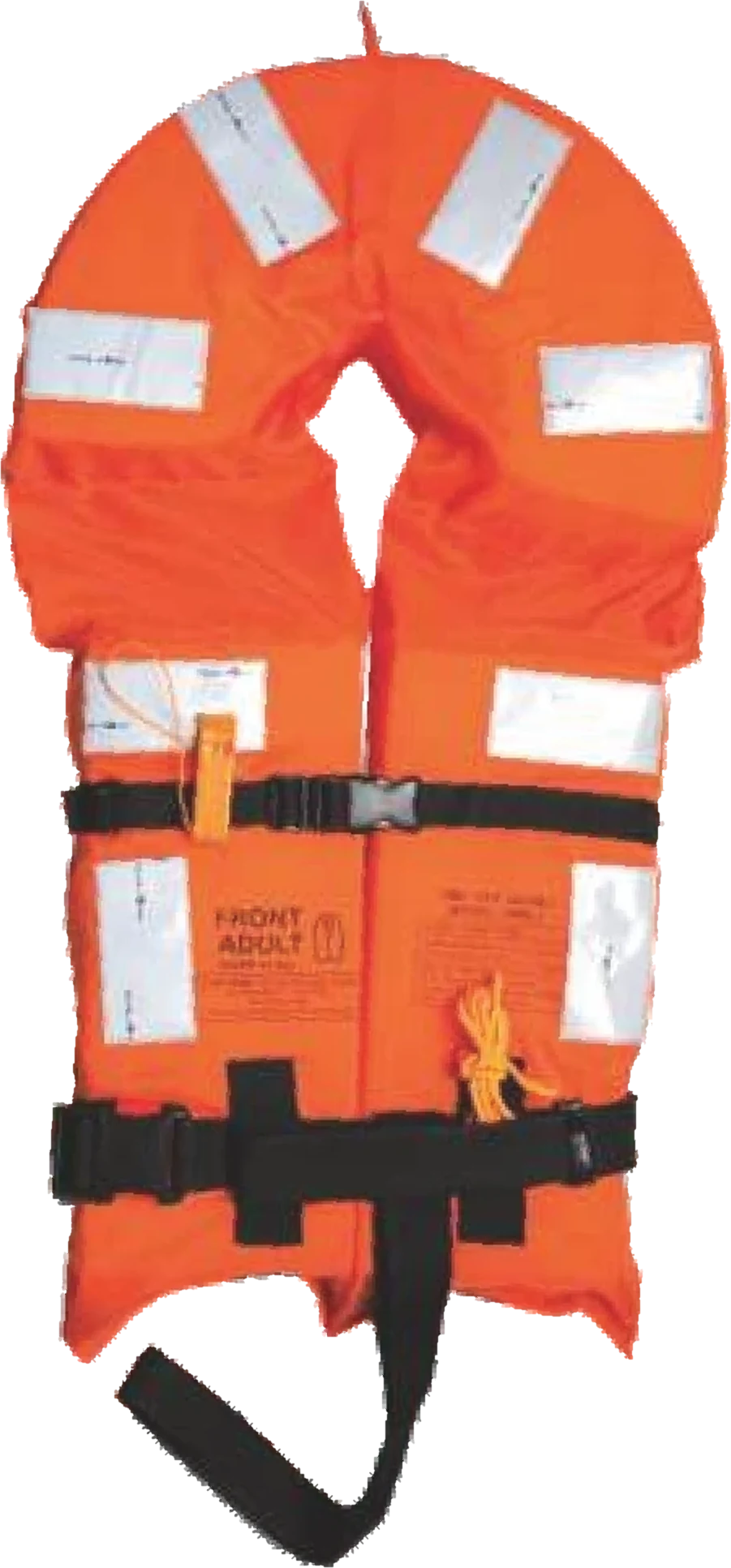
The MMLJ is the life jacket most buyers ask MM about first. Write its specification from the figures below, not from a photograph.
What the catalogue says
MM describes the MMLJ as a yoke-type personal life-saving device for commercial vessels, sized for universal and oversize passengers up to 175 cm chest girth. Its face-plane and body angles are designed to improve self-righting and freeboard for survival time, and it folds flat for stowage. A life jacket light is an optional accessory.
- Buoyancy: 240 N.
- PFD Type: I, the offshore class designed to turn most unconscious wearers face-up. PFD Type is the US-style class MM’s catalogue uses; ISO 12402 sets the buoyancy level. See the PFD types guide.
- User weight: up to 140 kg. Size: adult universal.
- Standards named: IRS type approval and the SOLAS LSA Code.
The child-sized MMLJC
The MMLJC is the child-sized version of the same yoke-type design, with a lifting loop, buddy line and webbing-end retainer for easier rescue. The catalogue gives it 90 N buoyancy, PFD Type I, and a user weight of up to 43 kg, against ISO 12402-3.
The two models
MM Life Jacket Model: MMLJ
Model MMLJ
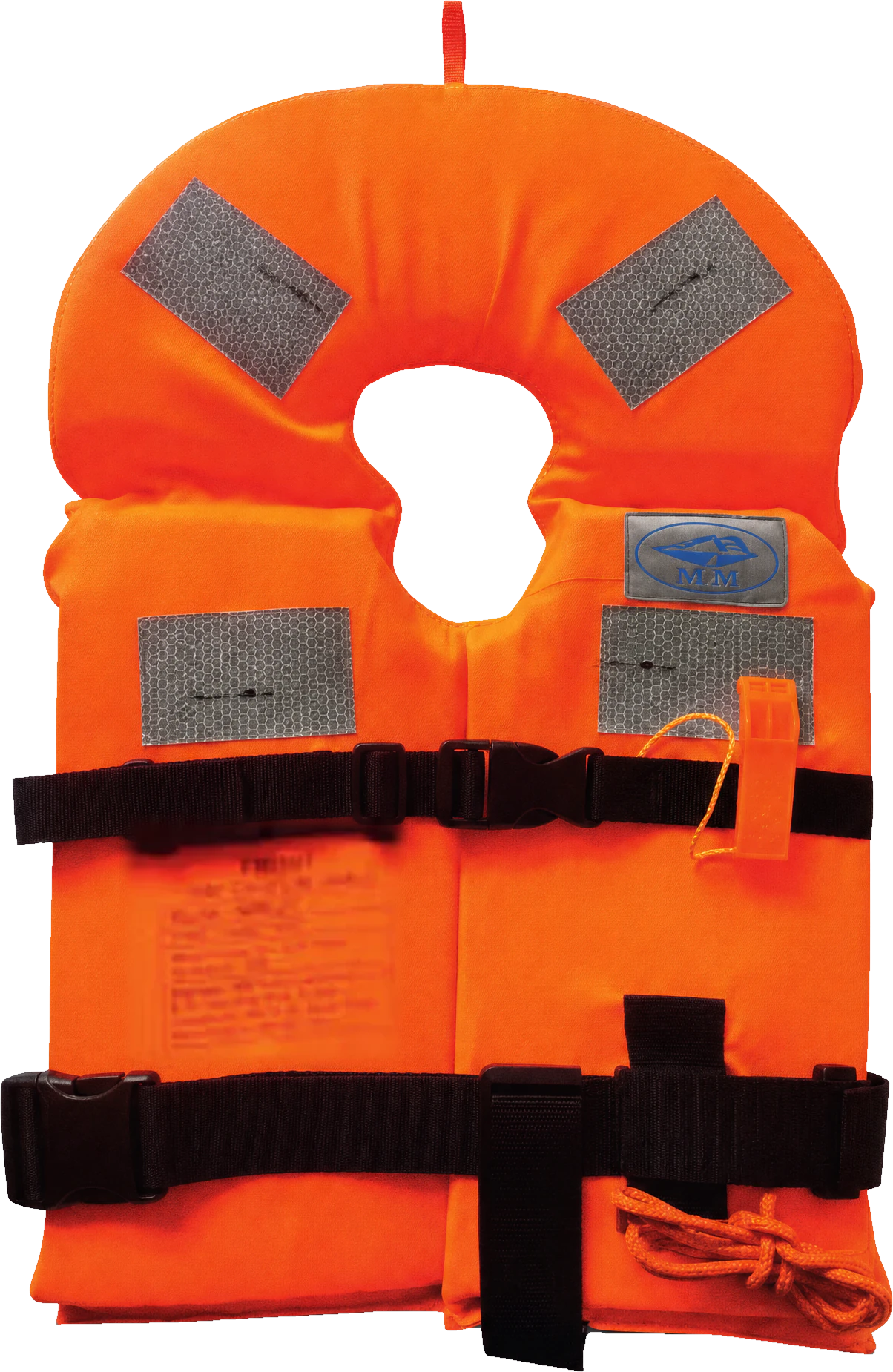
MM Life Jacket Model: MMLJC
Model MMLJC
Where it sits in the range
The MMLJ and the Sigma are the adult jackets MM lists as PFD Type I. The rest of the adult range is Type III, at 70 N to 150 N (the adjustable Soldier reaches 160 N), for deck work with the vessel close. The full table is on the Life Jackets & Work Vests page.
The certification register says which approvals MM holds a certificate for. Request a quote with the quantity and destination.