


 Vasai, Maharashtra
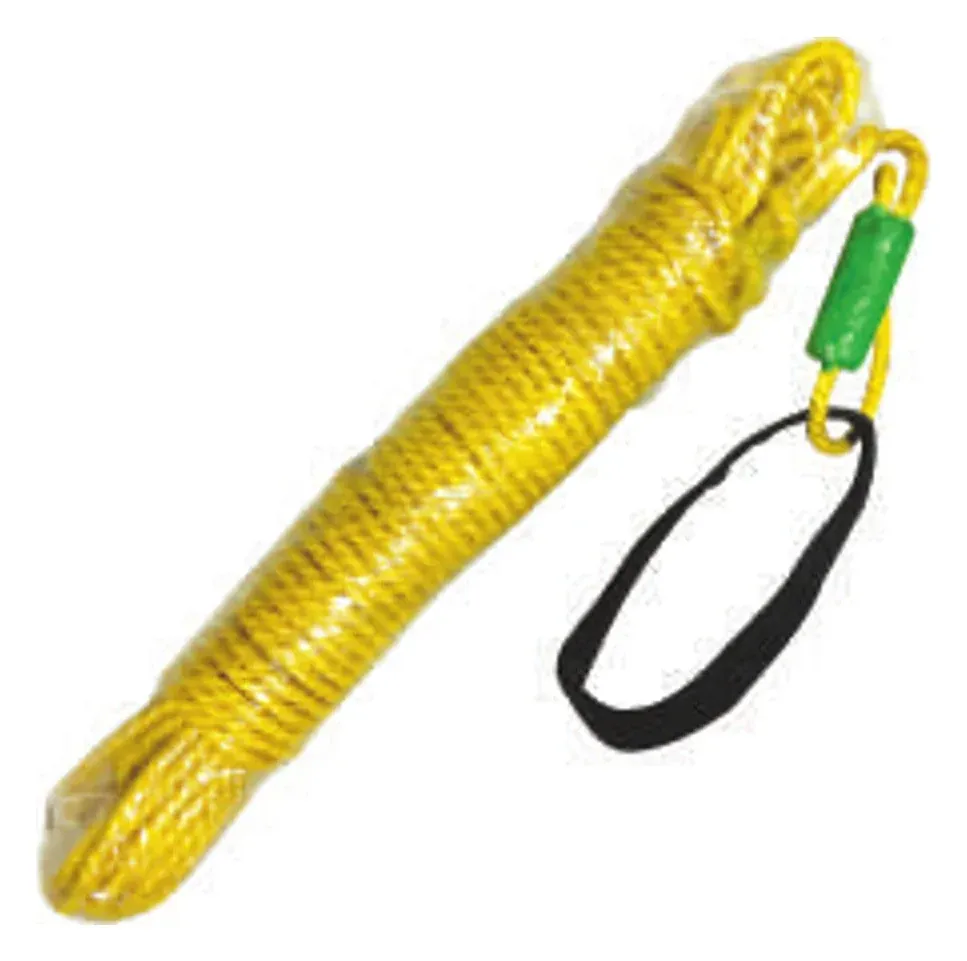
A lifebuoy thrown on its own drifts where the wind takes it. Tied to a buoyant lifeline, it can be thrown again if it misses, and once the person in the water has hold of it, they can be pulled back to the ship.
What is a buoyant lifeline?
A floating rope fixed to a lifebuoy. Because it floats, it lies on the surface where the person in the water can grab it. One end is made fast to the ring; the rescuer holds the other.
How long must a lifeline be under SOLAS?
At least twice the height at which the lifebuoy is stowed above the waterline in the lightest seagoing condition, or 30 m, whichever is greater (SOLAS chapter III, regulation 7.1.2). At least one lifebuoy on each side of the ship carries one. The rule means a line of at least 30 m for any ring stowed up to 15 m above the water, and a longer line for a ring stowed higher.
| Requirement | The rule |
|---|---|
| How many | At least one lifebuoy on each side of the ship |
| Length | Twice the stowage height above the lightest seagoing waterline, or 30 m, whichever is greater |
| Kinking | Non-kinking |
| Diameter | At least 8 mm |
| Breaking strength | At least 5 kN |
Boats outside SOLAS follow their own authority’s rules, and the vessel’s survey sets the length. The lifebuoy specification post covers the ring, its light and how many a ship carries.
What rope is MM’s MMBLL lifeline?
Polypropylene filament rope of 8 mm diameter, in two lengths: 25 m (MMBLL25) and 30 m (MMBLL30). It comes in orange or yellow, has a minimum breaking strength of 6 kN, and a nylon handle strap lets the rescuer hold the line firmly at one end. It names the MED Directive 2014/90/EU and CE.
Polypropylene is used because it is lighter than water, so the line floats without any added float. On length, the 30 m MMBLL30 covers the SOLAS minimum for a ring stowed up to 15 m above the water; a ring stowed higher needs a longer line. The 25 m line suits craft outside SOLAS whose survey accepts it. The MMLB lifebuoy can be ordered with an orange floating lifeline, 8 mm × 30 m.
| Specification | Value |
|---|---|
| Material | Polypropylene filament rope |
| Diameter | 8 mm |
| Length | 25 m (MMBLL25) or 30 m (MMBLL30) |
| Colour | Orange or yellow |
| Handle | Nylon strap |
| Breaking strength | 6 kN minimum |
Buoyant Lifeline – MMBLL25 & MMBLL30
Model MMBLL25 / MMBLL30
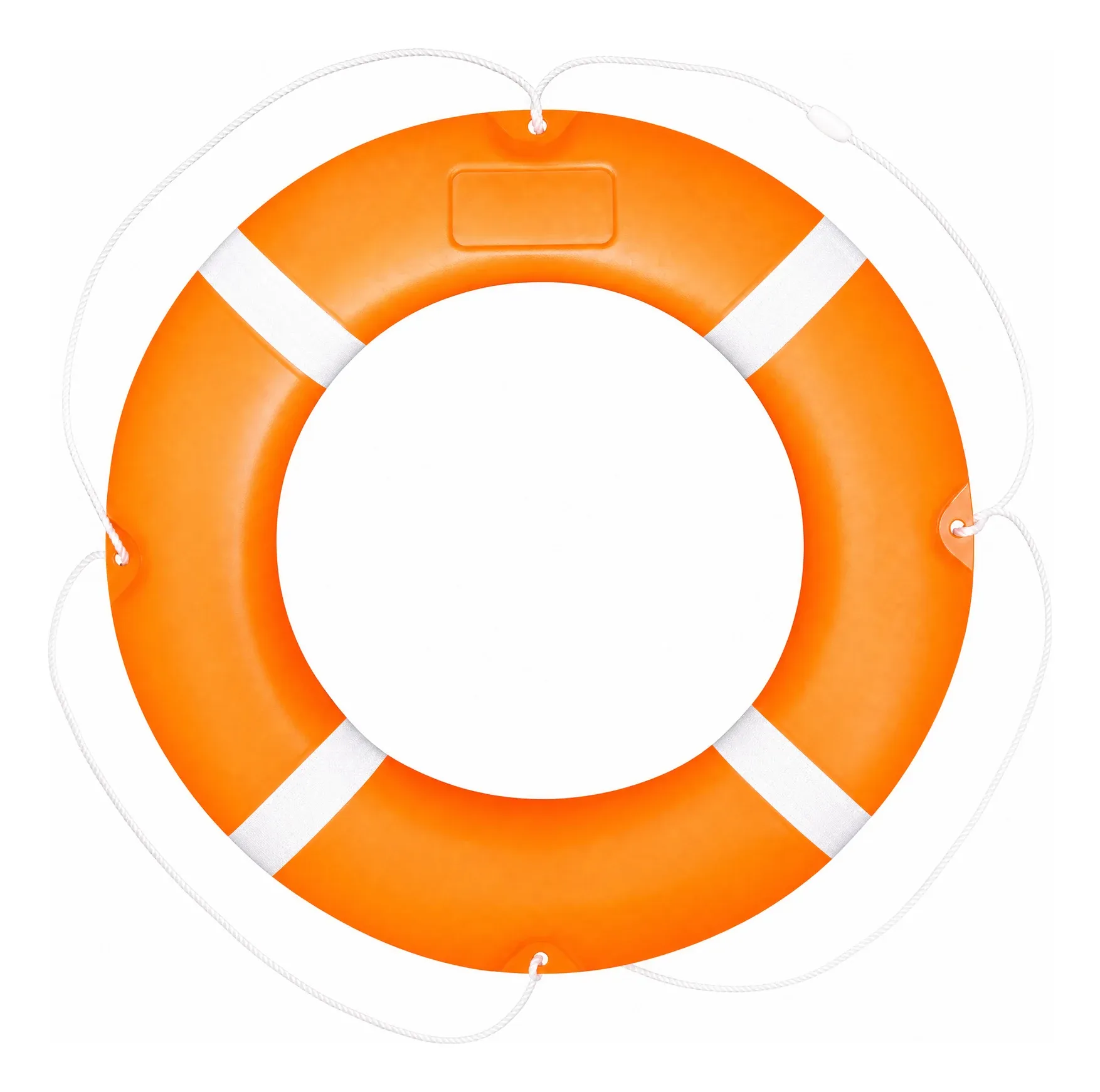
MM Lifebuoy Model: MMLB 2.5 & MMLB 4
Model MMLB-2.5 / MMLB-4
Orange or yellow?
Both colours show well on the water, and the choice is the buyer’s. Some fleets pick a line that contrasts with the orange ring, so the line can be traced from the ship to the person; others match the ring and every other lifesaving item on board. Whichever you choose, keep it the same across the vessel, so the crew knows what to look for.
Is a lifeline the same as a throw bag?
No. A throw bag carries its own line packed in a bag that is thrown on its own. The MMBLL is a line for throwing a lifebuoy ring: the ring gives the person in the water something to float on while they are pulled in, and the line brings the ring back if the throw misses.
How should a lifeline be coiled and stowed?
- Make one end fast to the lifebuoy’s grab line or as the vessel’s arrangement shows; keep the handle end free for the thrower.
- Coil or flake the line loosely so it runs out without snagging when the ring is thrown. A tight coil bound with tape will not pay out.
- Stow the line with the ring, in or beside its bracket, so both go overboard together and nothing has to be untied first.
- Keep it clear of sharp edges, paint and fuel, and out of direct sun where the stowage allows: polypropylene weakens in sunlight over time.
How is a lifebuoy with a line thrown?
Hold the handle strap or step on the line’s end, so the whole line does not follow the ring overboard. Throw the ring beyond the person and upwind or up-current of them, so it drifts down to them and the line lies across their reach; never aim at the person. When they have hold of it, pull steadily, keeping their head above water. If the throw misses, haul the ring back, recoil quickly and throw again. The man overboard post covers the first minute in full.
How do you check a lifeline?
- Rope: no cuts, chafe or melted spots; not faded, stiff or powdery from the sun.
- Ends: the knot or splice at the ring is sound, and the handle strap is fixed and unworn.
- Length: the whole line is there, still long enough for the ring’s stowage height.
- Stowage: the line runs free when pulled from its coil.
On a SOLAS ship this is part of the monthly inspection of life-saving appliances (SOLAS regulation III/20.7). A line that fails any check is replaced.
Tell us the number of lifebuoys, their stowage height above the water and the colour you need, and we will quote the line length: Request a quote.
Sources: IMO, SOLAS 1974, IMO Resolution MSC.48(66), the LSA Code.