


 Vasai, Maharashtra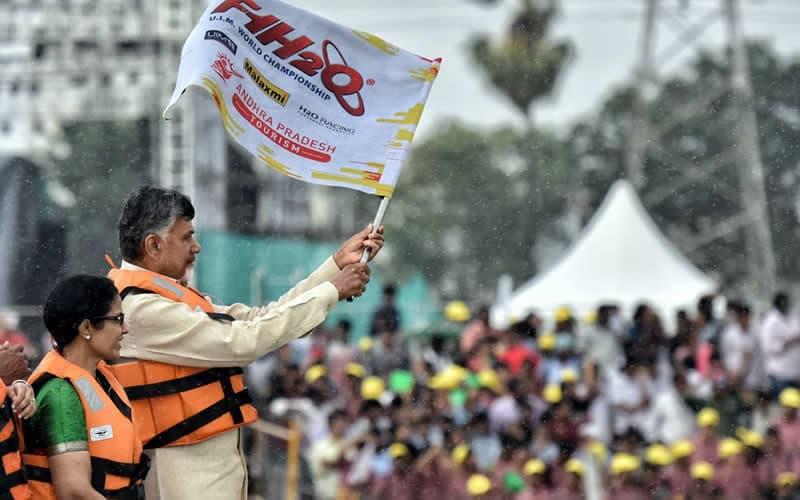
A life jacket only works if it stays on and sits right. Most of what goes wrong in the water, a jacket riding up over the face or slipping off over the head, starts with how it was put on. These are the steps for a foam jacket of the kind MM lists.
Before you put it on
- Check the label: the user-weight range must include the person wearing it. See life jacket sizes by weight.
- Check it over: no tears, every buckle works, the whistle and light are in place. See how long a life jacket lasts.
Putting it on, step by step
- Put it on like a waistcoat, or over the head for a yoke-type jacket such as the MMLJ, with the buoyancy at the front.
- Close every buckle and zip. A jacket left half-fastened can twist in the water.
- Tighten the belts from the bottom up: snug, but loose enough to take a deep breath.
- If the jacket has a leg or crotch strap, fasten it. It stops the jacket riding up.
- Tuck or tie off loose strap ends so they cannot snag on a rail or a net.
The lift test
Have someone take the jacket by the shoulders and lift. If it rides up past the chin or ears, tighten the belts, or move down a size. A child’s jacket must not come up over the head.
Jumping in from a height
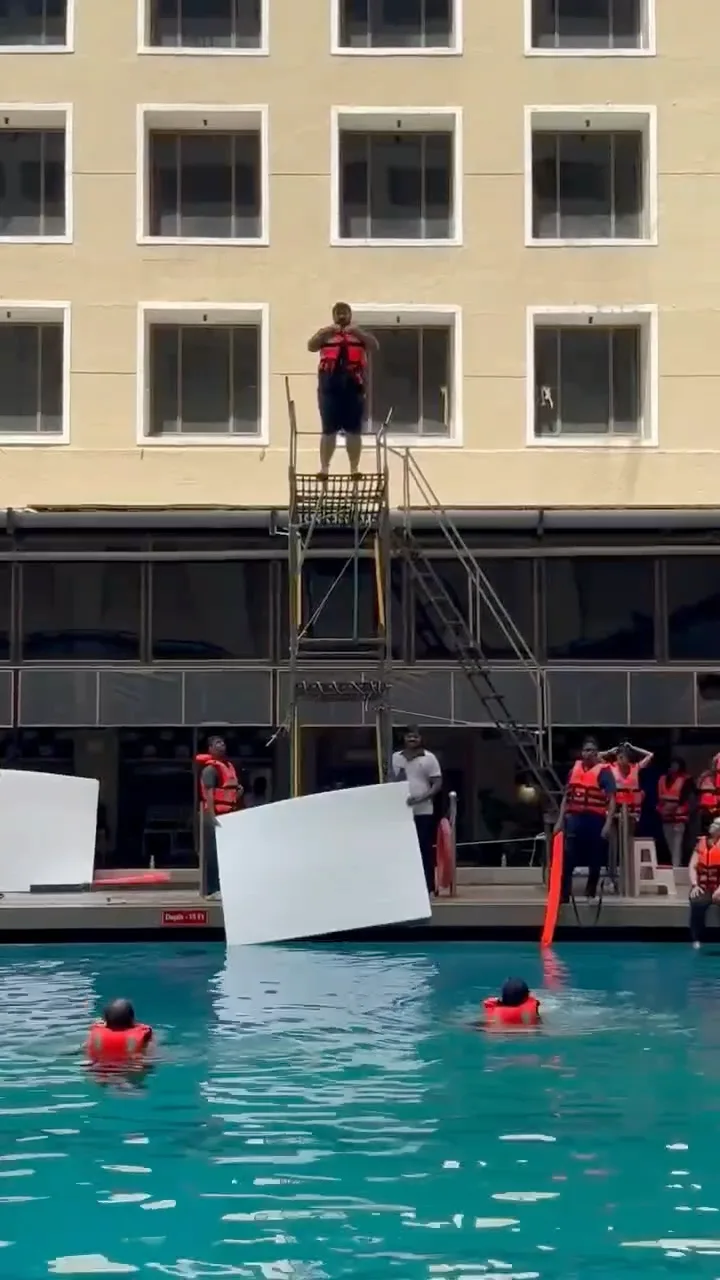
Jump only if you must, and from as low as you can. SOLAS tests a jacket with a jump from 4.5 m, and training advises going no higher.
- Check the water below is clear of people, wreckage and boats.
- Hold the jacket down: cross one arm over your chest and grip the jacket, so it cannot be forced up into your chin when you hit the water.
- Cover your nose and mouth with the other hand.
- Look straight ahead, not down, and step off feet first with your legs together.
In the water
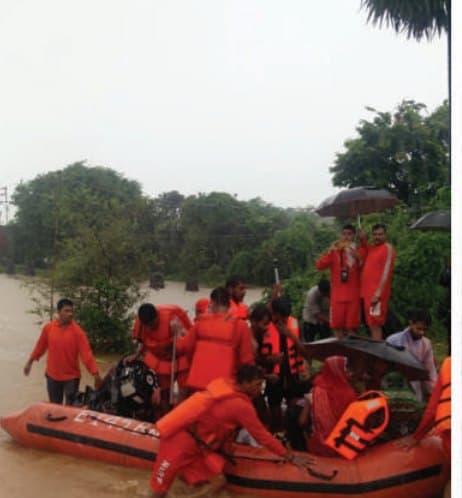
- Keep the jacket fastened. It is doing the work; save your strength.
- Alone, draw your knees up and hold them, with your arms close to your body. This is the heat escape lessening posture (HELP): it shields the chest, armpits and groin, where the body loses heat fastest.
- In a group, huddle together, chests close and arms round each other, with smaller people in the middle. A group keeps warmer and is easier to spot.
- Blow the whistle in short bursts, and switch on the light if water has not already done it. See life jacket lights.
- Do not try to swim a long way. Stay with the boat or wreckage if you can, and wait to be found.
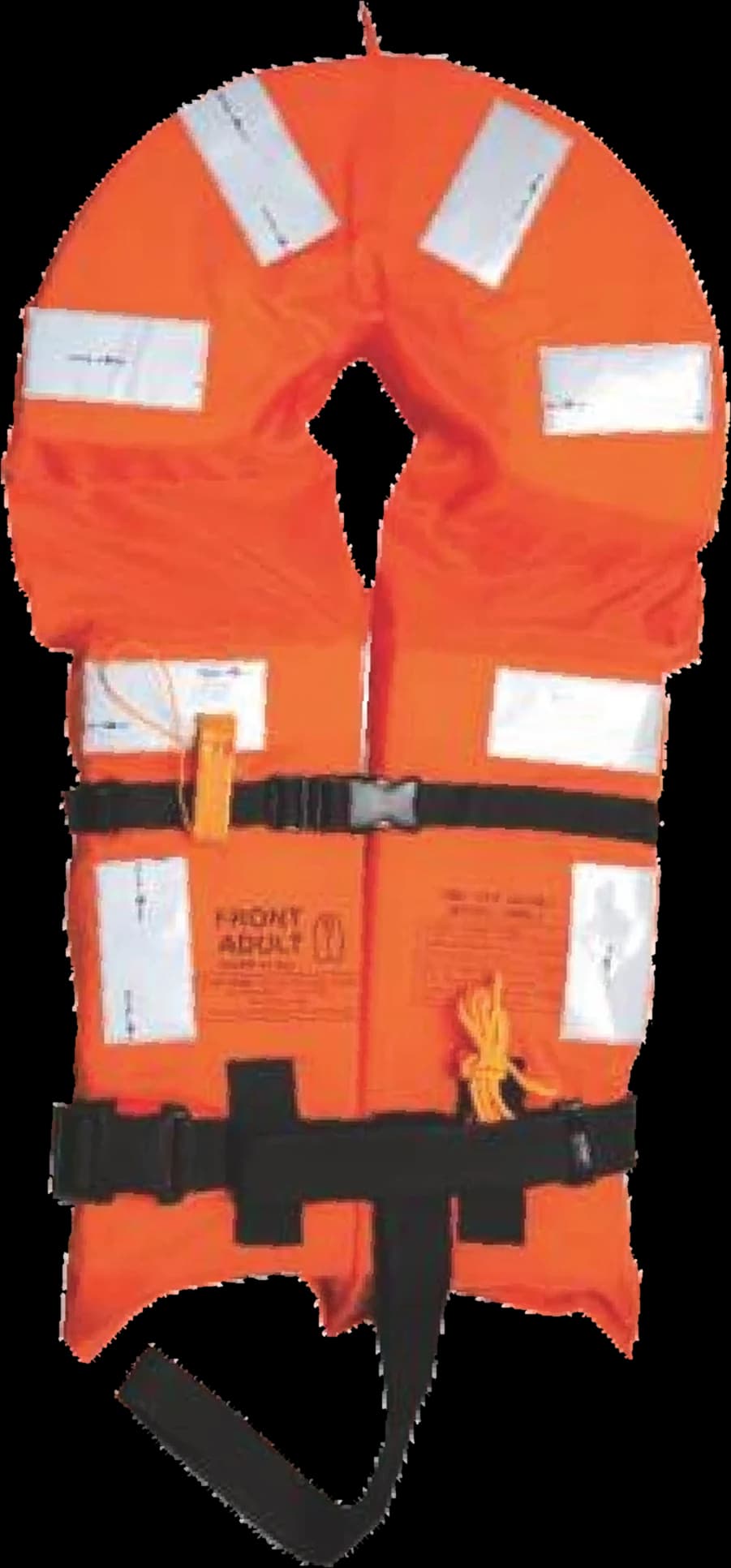
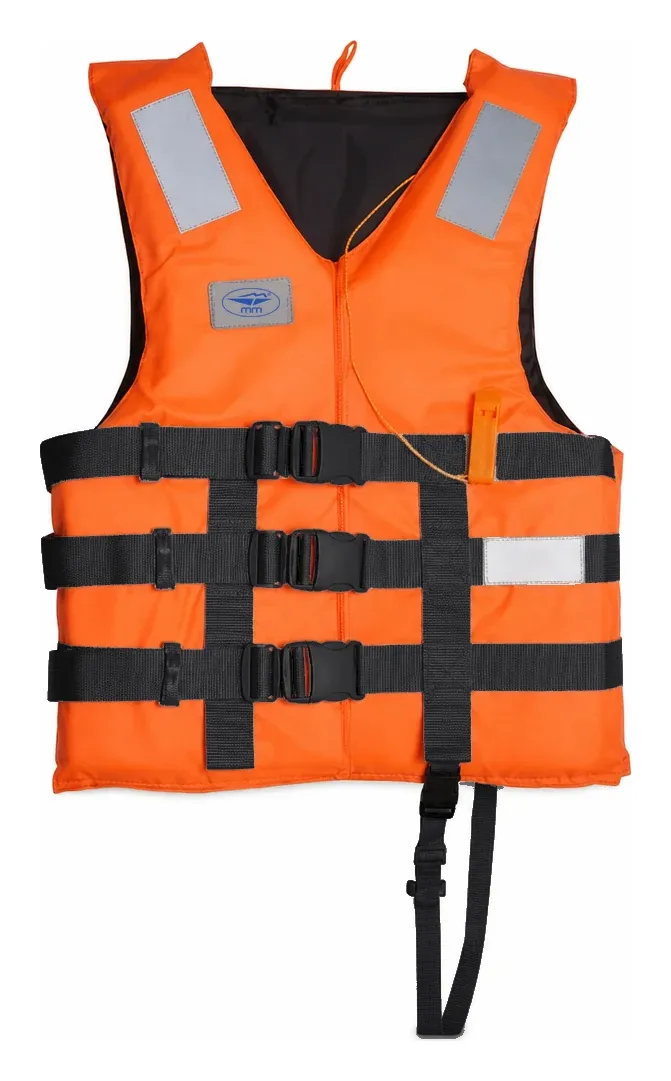
MM Life Jacket Model: MMLJ
Model MMLJ
MM Life Jacket Model: Sea Master
Model SEA MASTER
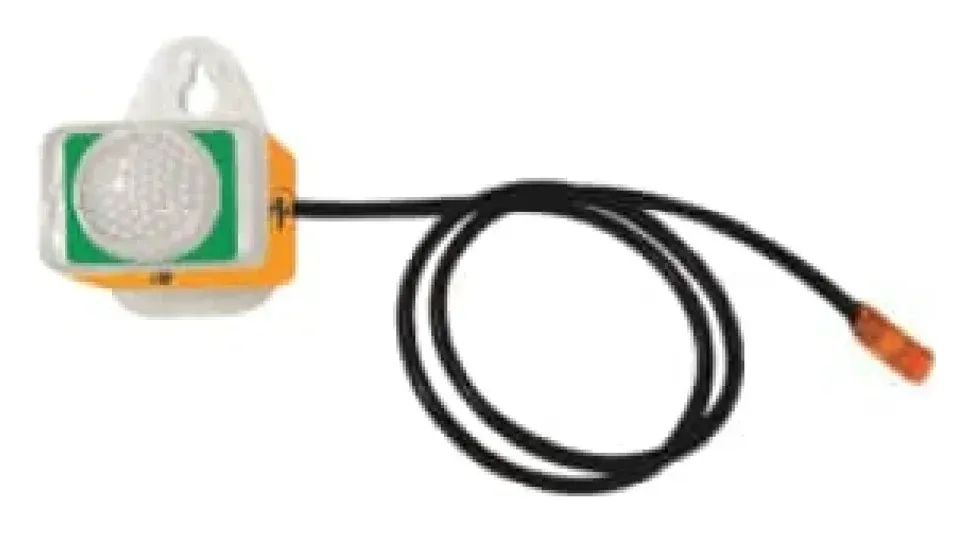
Life Jacket Light – MMLJL
Model MMLJL
This is general safety practice; follow the instructions on the jacket and your vessel’s own drills. Figures for MM’s jackets are in the range table.