


 Vasai, Maharashtra
Three of the commonest ways of netting fish at sea are the purse seine, the gill net and the trawl. Each hangs in the water differently, and the floats along its top are what set it there. Knowing how the net works is the first step to choosing its floats.
Purse seine
A purse seine is a long wall of netting set in a circle round a school of fish near the surface. A purse line runs through rings along the bottom of the net; hauling it in closes the bottom like the drawstring of a purse, trapping the school. Floats along the top line, the cork line, keep the top of the wall at the surface while the circle is closed.
Gill net
A gill net is a wall of fine mesh that fish swim into: a fish small enough to push its head through but too big to pass is held behind the gills. The balance of floats on the headline and weights on the footrope sets the net at the surface, in midwater or on the bottom, and the mesh size chooses the size of fish.
Trawl
A trawl is a cone-shaped net towed behind the boat. Floats on the headrope lift the top of its mouth while weights hold the bottom down, keeping the mouth open as it is towed.
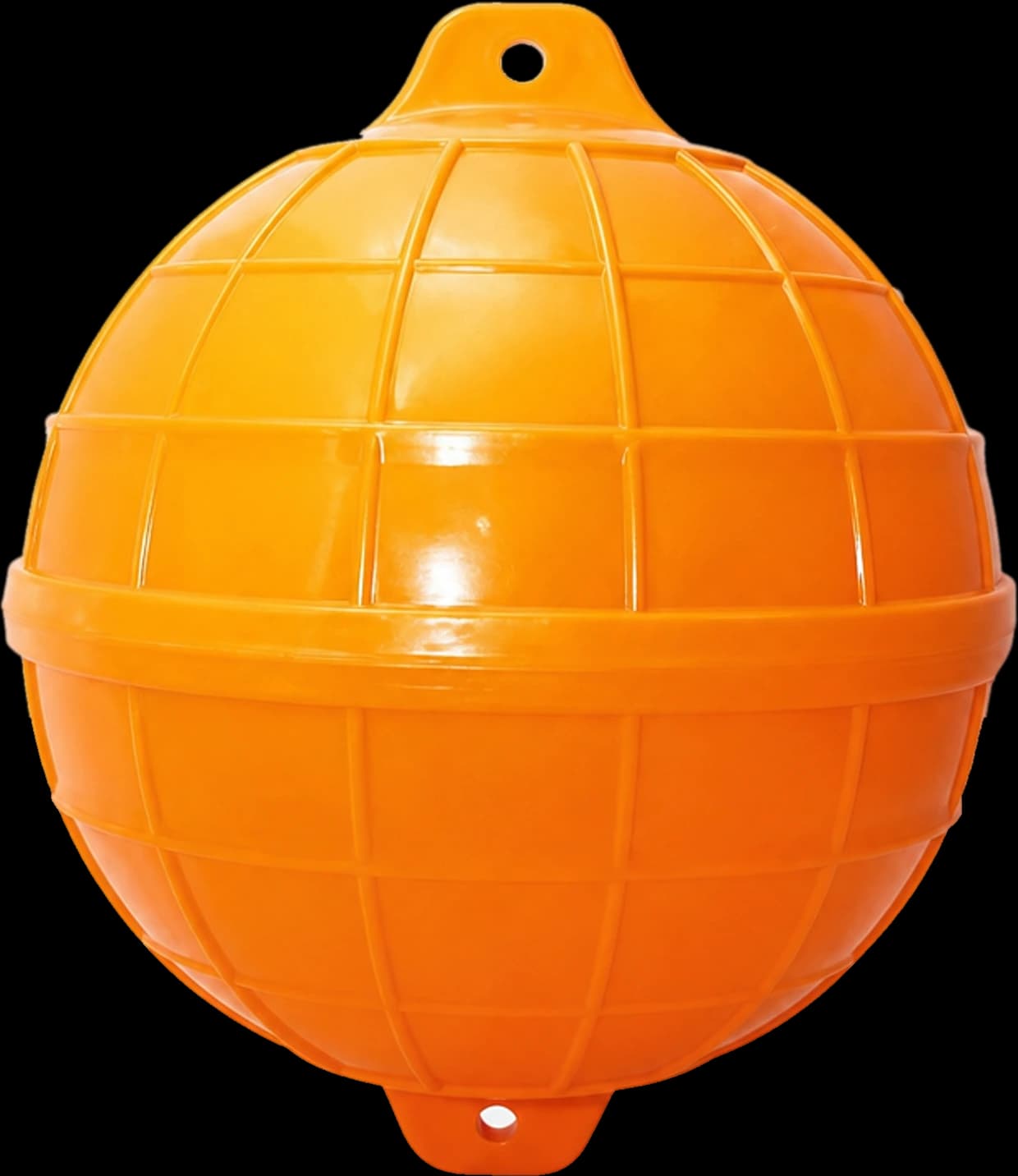
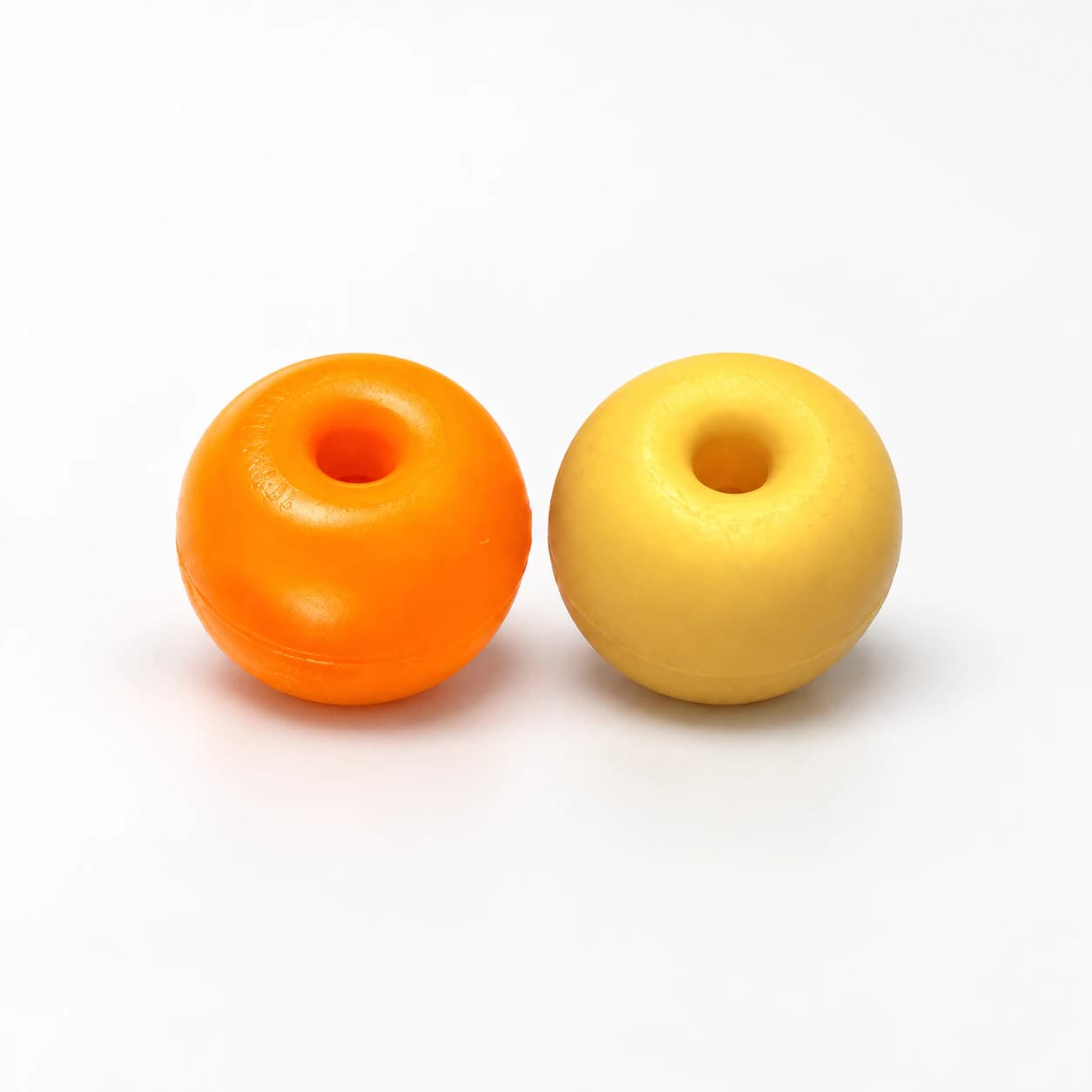
Which floats for which net
MM lists its globe floats with top and bottom eyelets for purse seine and gill nets, and its plain floats with two eyelets and the Micky Mouse float for trawling and breeding. Buoyancy is listed size by size; the 8″ globe float, for example, at 4,000 g. The float guide has every size.
| Size | Weight, buoyancy |
|---|---|
| 8″ | 710 g, buoyancy 4000 g |
| 9″ | 800 g, buoyancy 5000 g |
| 10″ | 1400 g, buoyancy 8000 g |
| 12″ | 2100 g, buoyancy 12000 g |
| 14″ | 3300 g, buoyancy 12000 g |
| 16″ | 3600 g, buoyancy 12000 g |
Float materials compared: hard plastic, EVA foam and pipe floats. Ask us for a quote with the net, the size and the quantity.