

 Vasai, Maharashtra
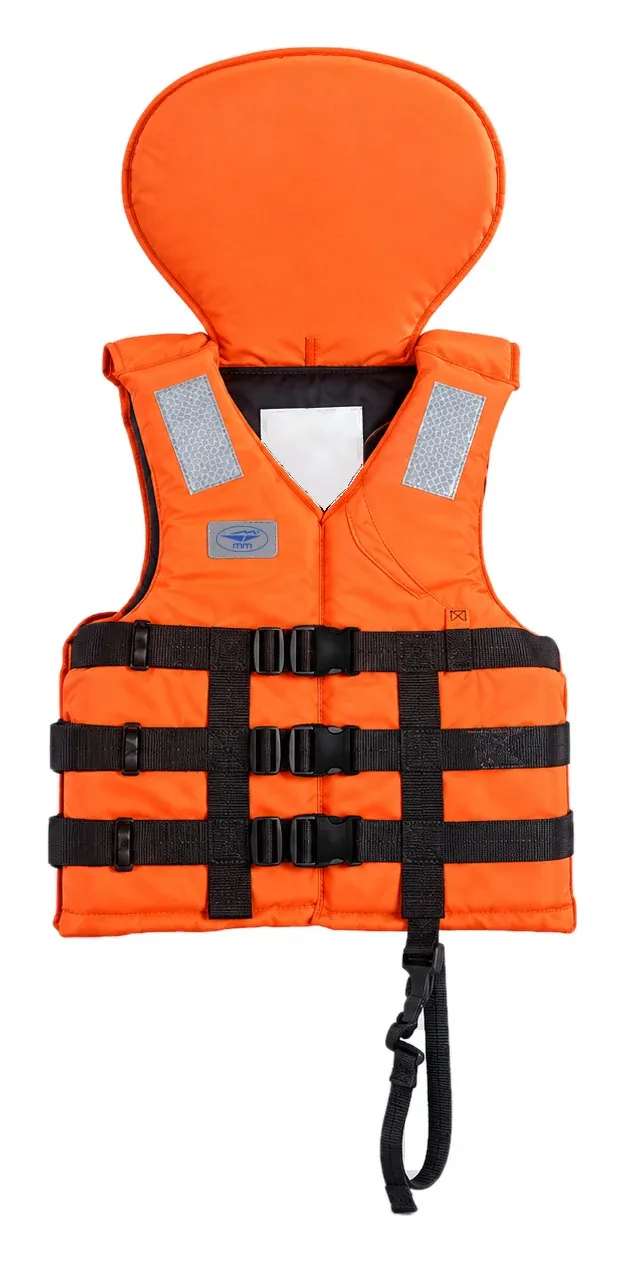
A flotation headrest is a buoyant pad that stands up behind the wearer’s head. In the water it holds the head back and the face up, so a tired, cold or unconscious person does not have to keep their own chin clear of the waves.
What does a headrest add to a life jacket?
Support for the head, and with it a steadier face-up position. A jacket without a headrest carries its foam on the chest and back; the head is left to the wearer’s neck. That is fine for someone awake and swimming. For someone who is exhausted, hurt or unconscious, the head drops forward or rolls to the side, and each wave can wash over the mouth. A headrest gives the back of the head something to rest on, so the face stays tilted up and the airway stays higher in the water.
A headrest also helps a rescuer. The pad is a large, bright mark behind the head, and a casualty who is already lying back is easier to reach and lift than one hanging face-forward.
Does a headrest add buoyancy or change the class?
Not in MM’s range. Each headrest model carries the same user weight, buoyancy, PFD type and ISO level as the jacket it is based on. The headrest changes how the wearer floats, not the lift on the label. The ISO level still decides what the jacket is for: level 100 (ISO 12402-4) is for sheltered water, where help is close, and level 150 (ISO 12402-3) is for general offshore use, where a jacket is designed to turn an unconscious wearer face-up. The buoyancy guide explains the levels in full.
| With headrest | Without headrest | |
|---|---|---|
| Head support in the water | Pad behind the head holds it back | Left to the wearer’s neck |
| Unconscious or exhausted wearer | Face held up more steadily | Head may drop forward or to the side |
| Movement on deck | Pad can catch on rigging or a hood | Clear behind the head |
| Stowage | Bulkier to stack and stow | Packs flatter |
| Visibility in the water | Extra bright area behind the head | Chest and shoulders only |
How do MM’s headrest models compare with the standard ones?
MM has three jackets in both forms. The figures below are the same for the headrest model and its standard twin; only the headrest differs.
- Sea Master and Sea Master Headrest: four size tiers, from Adult Universal up to 95 kg at 100 N (ISO 12402-4) down to Child Infant up to 14 kg. Both are PFD Type III with an optional life jacket light and buddy line.
- STERN and STERN with Headrest: Adult Universal, up to 120 kg, 120 N, PFD Type III, ISO 12402-4, with a leg strap.
- SUMO and SUMO with Headrest: Adult Universal, up to 140 kg, 150 N, PFD Type III, ISO 12402-3, with a leg strap.
The STERN and SUMO each have three polyester webbing belts on quick-release buckles, reflective tape panels front and back, and an emergency whistle. The SUMO pair is the only one of the three at level 150, so it is the one to look at first when the wearer may be in open water for a long time.
| Specification | Value |
|---|---|
| Adult Universal | Up to 95 kg · PFD III · 100 N · ISO 12402-4 |
| Child Large | Up to 80 kg · PFD III · 100 N · ISO 12402-4 |
| Child Junior | Up to 36 kg · PFD III · 50 N · ISO 12402-5 |
| Child Infant | Up to 14 kg · PFD III · 50 N · ISO 12402-5 |
| Accessories | Life jacket light / buddy line (optional) |
Who should choose a headrest jacket?
- Children and non-swimmers, who are least able to hold their own head up. The Sea Master Headrest comes in all four tiers, infant to adult.
- Anyone who may wait a long time in the water before pick-up: crews working at night, alone, or far from another boat.
- Passengers on ferries, tours and rescue boats, who wear a jacket rarely and may panic or tire quickly.
- Flood and rescue teams, whose casualties are often exhausted before anyone reaches them.
When is a jacket without a headrest the better choice?
When the jacket must be worn all day for work. A crew hauling nets, handling lines or working under a hood or a helmet may find a headrest catches, pushes the head forward or gets in the way when looking up. A jacket that gets taken off because it annoys the wearer protects no one, so for deck work the standard model, worn all shift, is the safer choice. The fishermen’s post covers what crews will keep on.
Stowage counts too. Headrest jackets take more room in a locker or under a seat, which matters on a small boat that has to carry one for every person aboard.
What about a SOLAS ship?
The three headrest models are ISO 12402 jackets; none of them names SOLAS or IRS type approval. A SOLAS ship’s jackets must be approved to the LSA Code, and MM’s two adult jackets that name IRS type approval are the MMLJ, a yoke-type jacket whose face-plane and body angles help it self-right and hold the face clear of the water, and the Sigma, a vest-type jacket with a collar. The SOLAS requirements post sets out what such a jacket must do.
MM Life Jacket Model: Sea Master Headrest
Model SEA MASTER HEADREST
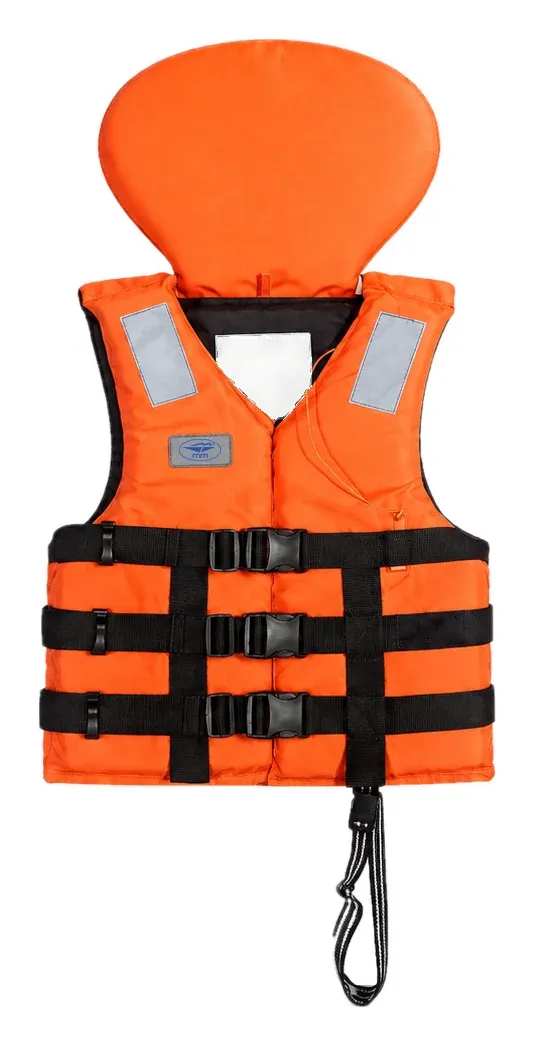
MM Life Jacket Model: STERN with Headrest
Model STERN WITH HEADREST
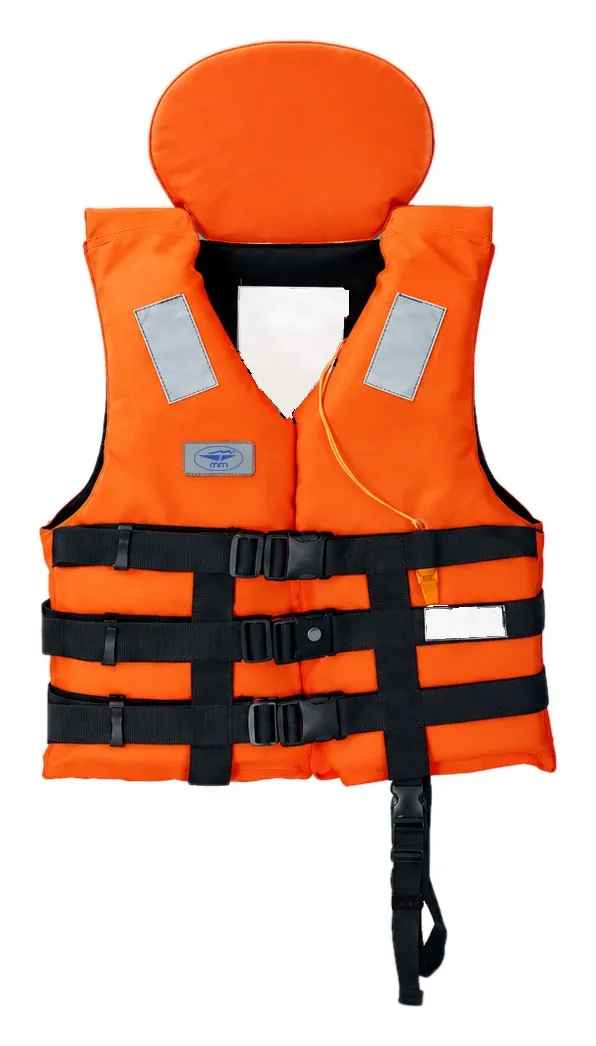
MM Life Jacket Model: SUMO with Headrest
Model SUMO WITH HEADREST
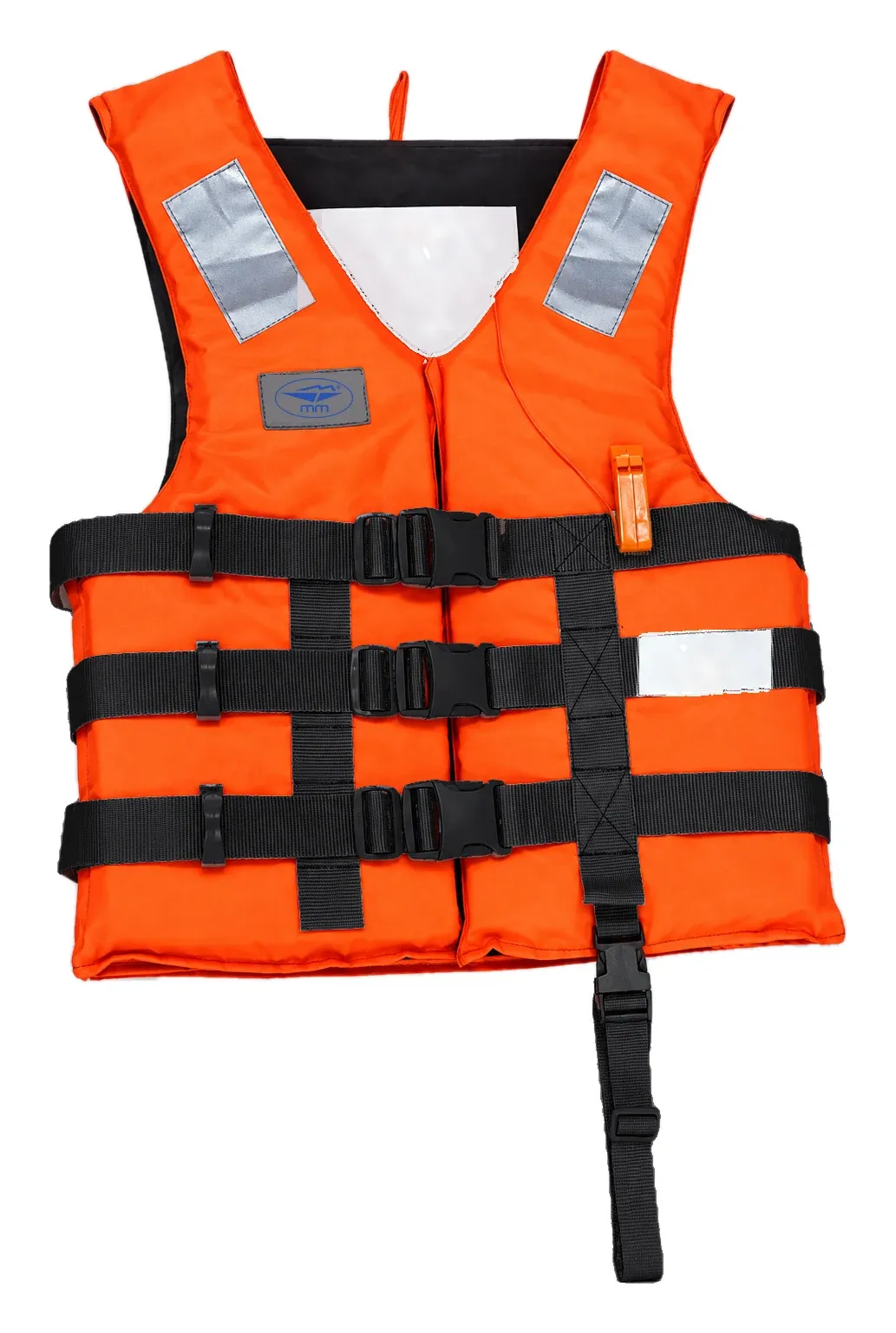
MM Life Jacket Model: SUMO
Model SUMO
Tell us who will wear the jackets, their weights, and whether they will work in them or keep them for emergencies, and we will suggest the model with or without a headrest: Request a quote.